
Introduction:
End-result thinking means focusing your mind on the final outcome as if it has already been achieved. Instead of worrying about the process or obstacles, you think from the state where success is real. This approach creates clarity and confidence because your mind knows the direction. When you imagine the result as done, your emotions become calmer and more positive. This reduces overthinking and hesitation. End-result thinking does not ignore effort; it simply guides your thoughts and actions toward the desired outcome. By holding the image of success consistently, your decisions and behavior naturally begin to align with that result.
Why the Brain Responds Better to Clear Outcomes

The brain works best when it has a clear destination. When your goal is vague, the mind becomes confused and wastes energy deciding what to do next. Clear outcomes give direction, making it easier to focus and take action. The brain naturally looks for patterns and solutions when it knows the final result. This reduces overthinking and hesitation. When you visualize or define the outcome clearly, your mind starts organizing thoughts, priorities, and behavior around that goal. Instead of reacting randomly, you begin to act with purpose. Clear outcomes create confidence because your mind understands what success looks like.
How Clear Outcomes Help the Brain Perform Better:
- Clarity reduces confusion and decision fatigue
When the desired result is clearly defined, the brain does not waste energy trying to decide what to do next. This reduces mental overload and hesitation. With fewer choices to analyze, your mind feels lighter, confident, and more ready to take focused action. - A clear goal improves focus and attention
When the brain knows the exact destination, it automatically filters unnecessary distractions. Your attention stays on tasks that support the goal instead of random activities. This focused direction helps you work faster, make fewer mistakes, and maintain steady progress without constant mental switching. - Defined results activate natural problem-solving ability
Once the mind understands the final outcome, it begins searching for ways to reach it. The brain connects ideas, resources, and opportunities more effectively. This activates both logical thinking and creativity, helping you find solutions instead of getting stuck in confusion or delay. - Clear outcomes increase motivation and consistent effort
When success is clearly visible in your mind, your actions feel meaningful and purposeful. This emotional connection increases motivation and helps you stay committed even when challenges appear. Consistent effort becomes easier because the brain understands why the work matters.
The Difference Between Hoping vs Knowing
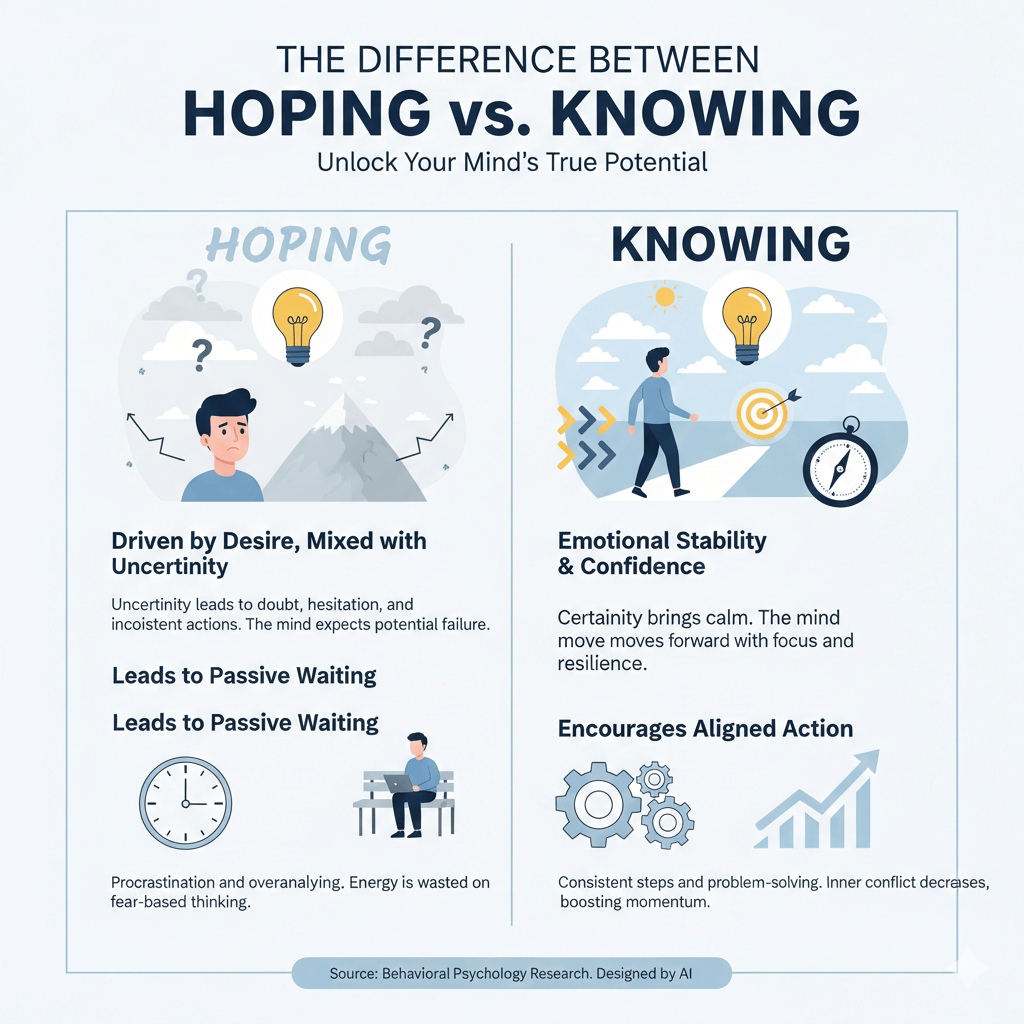
Hoping and knowing create very different internal states. Hoping means you want something but are unsure if it will happen. This uncertainty brings doubt, hesitation, and emotional ups and downs. Knowing, on the other hand, creates confidence and calmness because the mind accepts the result as possible and real. When you operate from hope alone, actions become inconsistent. When you operate from a sense of knowing, decisions become clearer and more focused. End-result thinking encourages a shift from uncertainty to quiet confidence. This does not mean ignoring effort—it means trusting the direction while continuing to take steady, aligned action.
Key Differences Between Hoping and Knowing
- Hoping is driven by desire but mixed with uncertainty
When you hope for an outcome, part of your mind still expects failure or delay. This mixed signal creates hesitation and reduces confidence. Actions become inconsistent because the brain is unsure whether to fully commit or stay protected from disappointment. - Knowing creates emotional stability and confidence
A sense of knowing brings calm certainty. Even if the result is not visible yet, the mind feels safe moving forward. This emotional stability improves focus, reduces fear-based thinking, and helps you take consistent steps without overanalyzing every decision. - Hope often waits, while knowing encourages action
Hoping can lead to passive waiting for the right moment. Knowing shifts your behavior toward taking small, practical steps. The brain treats the goal as achievable, so it naturally looks for opportunities and solutions instead of delaying progress. - Knowing reduces internal resistance and doubt
When you feel certain about the direction, inner conflict decreases. Thoughts, emotions, and actions begin to align. This alignment lowers procrastination, strengthens motivation, and allows progress to happen with less pressure and more steady momentum.
How End-Result Thinking Reduces Overthinking
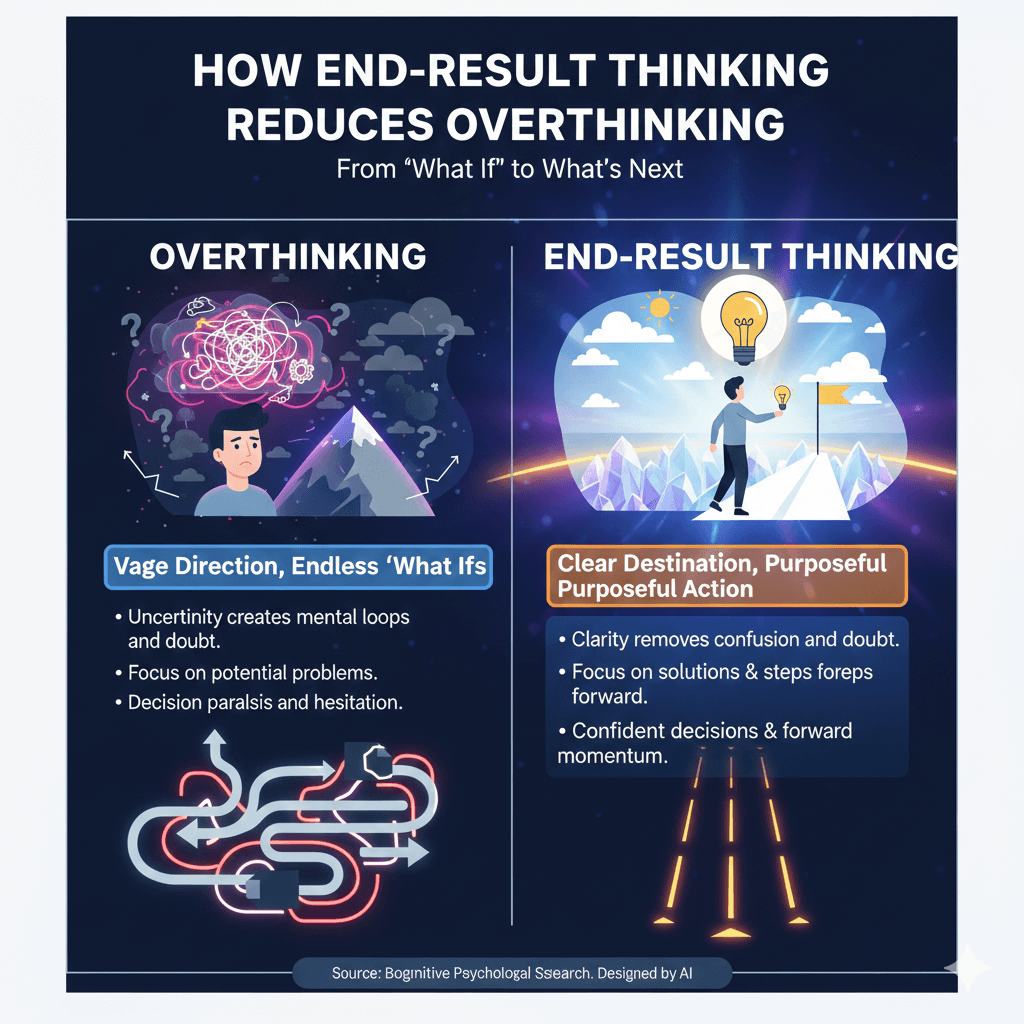
End-result thinking reduces overthinking by giving the mind a clear destination. When you focus on the final outcome as already possible, the brain stops analyzing endless “what if” situations. Overthinking usually happens when the mind is unsure about direction. A clear end result removes confusion and provides certainty. This helps you make decisions faster and with less emotional pressure. Instead of worrying about every small step, you begin to trust the process and move forward. End-result thinking does not ignore planning—it simply prevents unnecessary mental loops. With clarity about the outcome, your attention shifts from doubt to purposeful action.
How It Reduces Overthinking
- A clear end result stops endless decision loops
When your mind knows the final destination, it stops repeatedly analyzing every possible option. This reduces mental confusion and saves energy. Example: Raj decided his goal was promotion, so he focused only on improving his skills instead of constantly questioning different career directions. - Certainty reduces fear-based thinking and hesitation
Overthinking often comes from fear of making the wrong choice. When the result feels clear and achievable, fear reduces naturally. Example: Maria committed to starting her business and stopped delaying decisions about branding, tools, and planning because her direction was already decided. - Focused direction protects mental energy from distractions
When you think from the end result, the brain filters unnecessary thoughts and tasks. This keeps attention on what truly matters. Example: Priya chose one main task each day and avoided getting pulled into low-priority work that previously drained her energy. - Clarity encourages faster and more confident action
When the destination is fixed, small steps feel safer and easier to take. Confidence grows because the mind trusts the direction. Example: Raj began practicing presentations regularly instead of repeatedly questioning whether he was ready to perform well.
Emotional State When You Think From the End
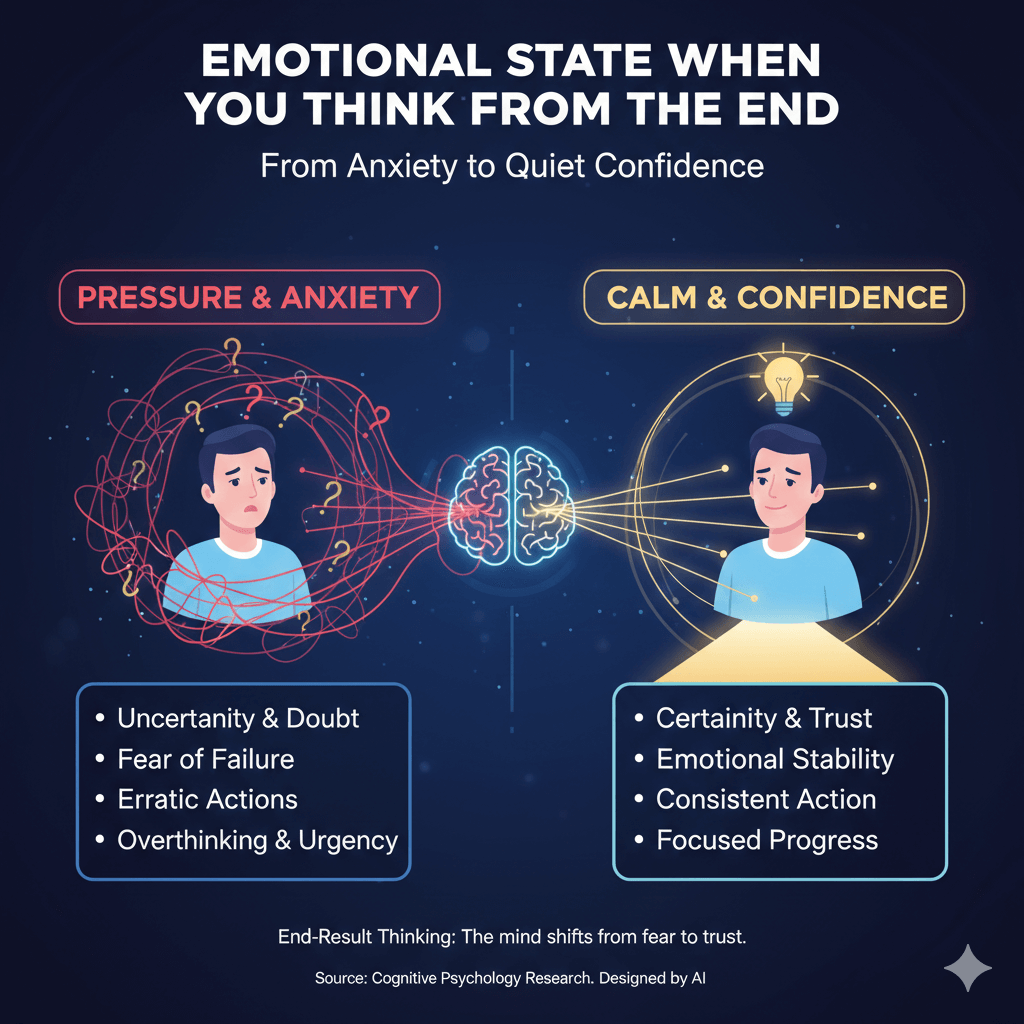
When you think from the end result, your emotional state naturally becomes calmer and more confident. Instead of feeling pressure about how things will happen, you begin to feel a quiet sense of certainty. This reduces anxiety, doubt, and urgency. The mind shifts from fear to trust, which makes decisions easier. When emotions are stable, actions feel lighter and more consistent. Thinking from the end does not mean ignoring effort—it means working with a mindset that the result is possible and safe. This emotional stability helps you stay focused, avoid overreactions, and maintain steady progress toward your goal.
How End-Result Thinking Changes Your Emotional State
- Creates calm confidence instead of pressure
When the mind accepts the result as achievable, emotional tension avoided. You feel less urgency to control everything. Example: Raj imagined his presentation already successful, which reduced nervousness and helped him speak more confidently. - Reduces fear and emotional resistance
Thinking from the end makes goals feel familiar rather than risky. This lowers fear-based reactions. Example: Maria visualized her business running smoothly, which reduced her hesitation to take the first practical steps. - Improves emotional stability during challenges
When you trust the direction, temporary problems feel manageable instead of overwhelming. Example: Priya stayed calm during a tight deadline because she focused on the final completed result instead of the pressure. - Builds motivation through positive emotional connection
Feeling the result as real creates excitement and purpose. This emotional connection encourages consistent effort. Example: Raj felt motivated to practice daily because he emotionally connected with his future success.
The Role of the Subconscious Mind in Accepting Results
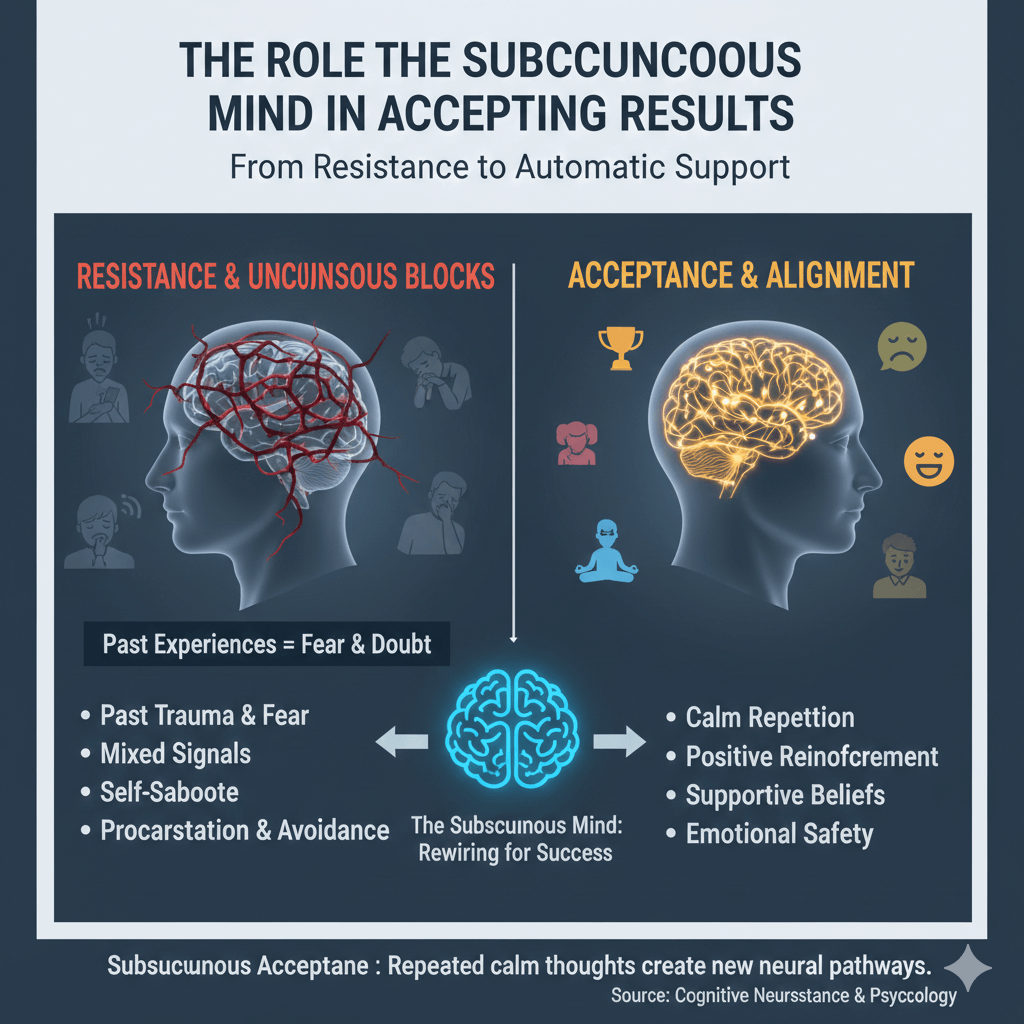
The subconscious mind plays a major role in whether you accept or resist your desired results. It stores your past experiences, beliefs, and emotional memories. If the subconscious associates success with stress, fear, or pressure, it may create hesitation even when you consciously want progress. When new ideas or goals are repeated with calm emotion, the subconscious slowly accepts them as safe and possible. This acceptance reduces inner resistance and makes action feel natural. The subconscious does not respond to words alone—it responds to repeated thoughts, feelings, and experiences. Once it accepts a result as normal, your behavior begins to support it automatically.
How the Subconscious Mind Accepts Results
- Repetition with calm emotion builds acceptance
When you repeatedly think about a goal while feeling relaxed, the subconscious begins to treat it as familiar and safe. Over time, this reduces hesitation and increases confidence because the mind no longer sees the result as something unusual or risky. - Stored past experiences influence current behavior
The subconscious compares new goals with old memories. If past experiences included failure or criticism, resistance may appear. By creating new positive experiences—like small wins—the subconscious updates its pattern and becomes more supportive. - Beliefs formed subconsciously guide daily decisions
Once a belief is accepted internally, your choices begin to align automatically. You start taking actions that match the expected result, often without conscious effort, because the mind now treats that outcome as normal. - Emotional safety allows new results to feel possible
When the nervous system feels calm, the subconscious lowers its protective response. This makes it easier to accept growth, success, or change without triggering fear, doubt, or avoidance behaviors.
How the Nervous System Reacts to Certainty vs Pressure
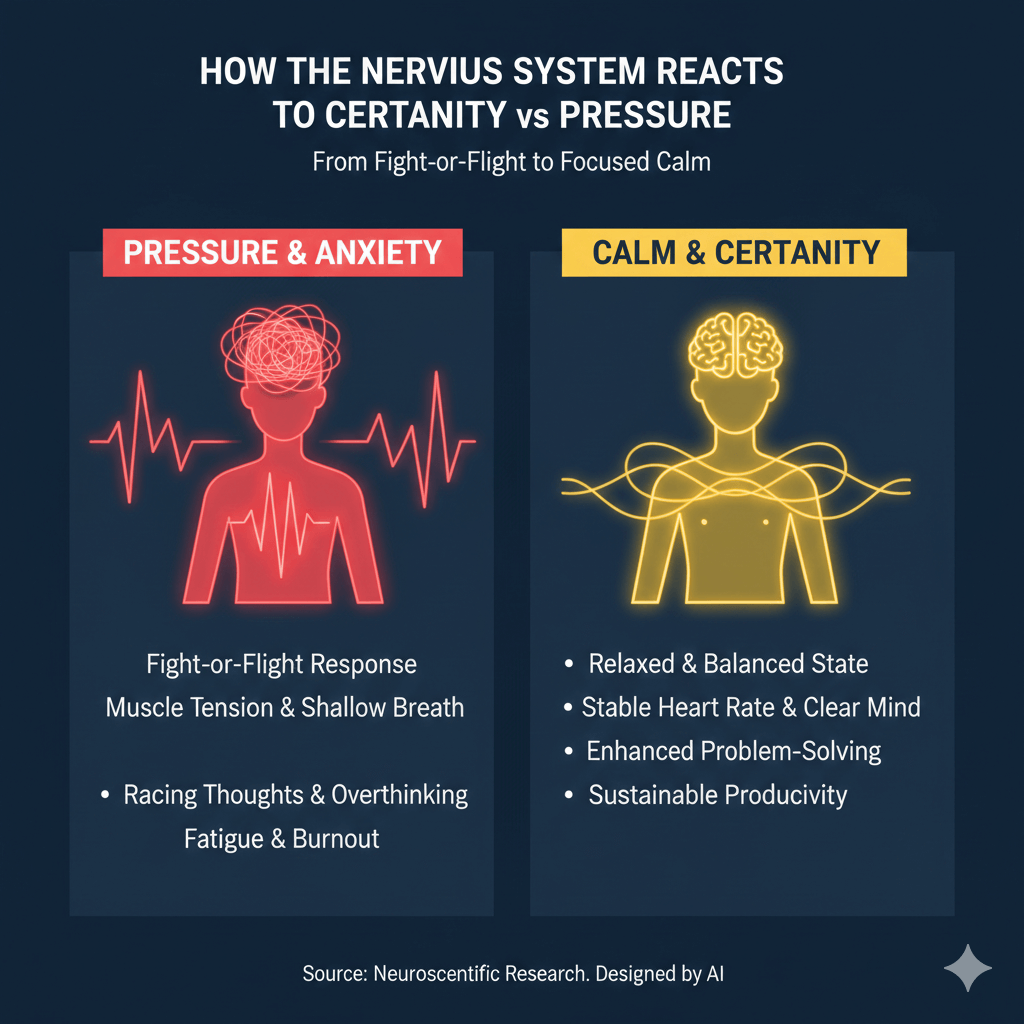
The nervous system responds very differently to certainty and pressure. When you feel certain about your direction, the body receives a signal of safety. In this calm state, breathing becomes steady, thoughts are clearer, and actions feel natural. When you feel pressure, the nervous system shifts into fight-or-flight mode. This creates tension, overthinking, and emotional reactivity. The brain focuses on protection instead of creativity or problem-solving. Many productivity and manifestation struggles happen because people try to act while feeling pressured. Certainty does not mean knowing every step—it means trusting the direction, which keeps the body relaxed and the mind focused.
How Certainty vs Pressure Affects Your State
- Certainty activates a calm and focused state
When you feel confident about the outcome, the nervous system relaxes and shifts into a balanced mode. Heart rate and breathing stabilize, allowing clear thinking. In this state, decisions feel easier and actions become steady because the body does not sense immediate threat. - Pressure triggers the fight-or-flight response
When tasks feel urgent or high risk, the body prepares for protection. Muscles tense, breathing becomes shallow, and thoughts race. This survival mode reduces creativity and patience, making even simple work feel heavy and exhausting. - Calm states improve problem-solving and performance
With reduced stress, the brain can access logic and creativity together. You notice solutions faster and communicate more clearly. For example, Priya handled a difficult meeting better after taking a few slow breaths to restore calm. - Chronic pressure leads to fatigue and burnout
When the nervous system stays in alert mode for long periods, energy drains quickly. Motivation drops and procrastination increases. Building moments of certainty—through clear goals and calm breathing—helps the body recover and maintain sustainable productivity.
Daily Practices to Build End-Result Thinking
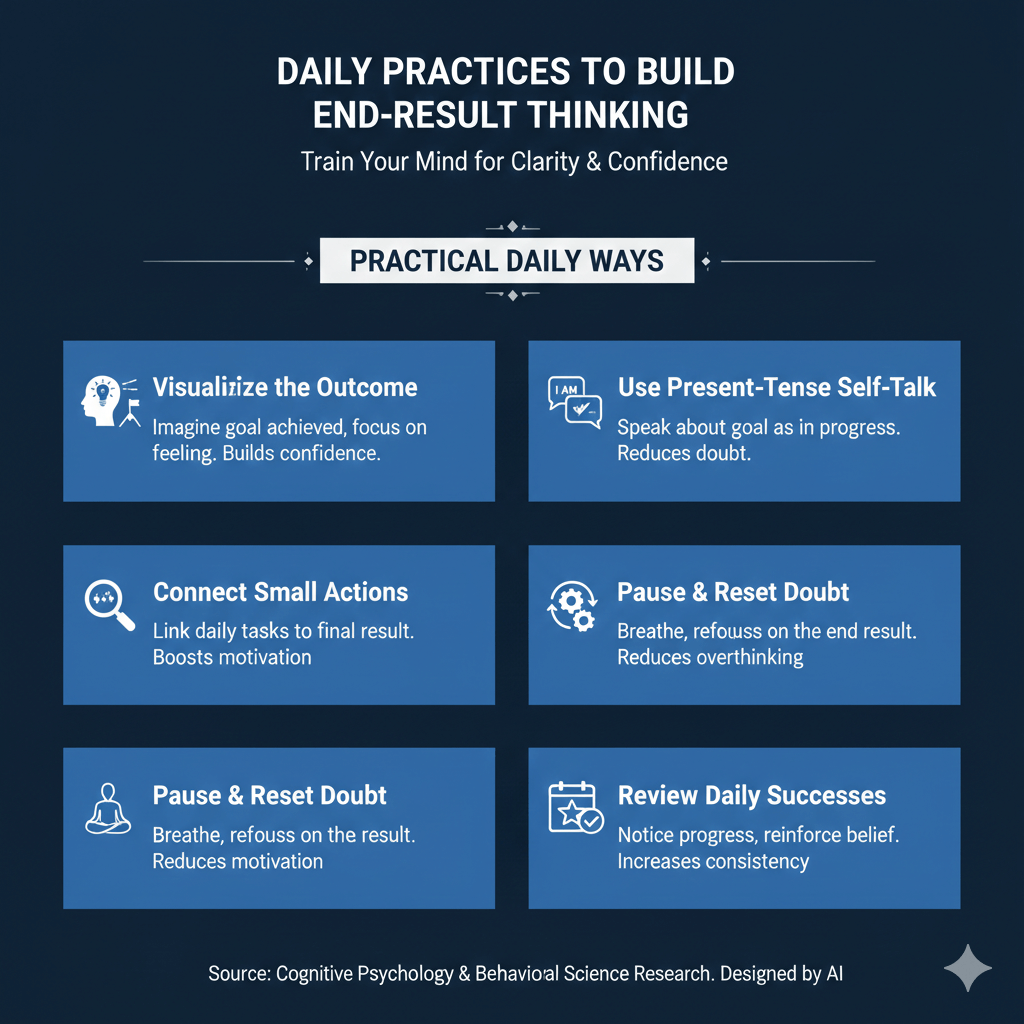
End-result thinking becomes strong through simple daily practice, not by forcing belief. The goal is to train your mind to focus on the finished outcome while staying calm and realistic. When you repeatedly imagine and feel the result as possible, your thoughts and emotions begin to align with that direction. This reduces doubt and overthinking. Daily practices help the subconscious accept the goal as normal instead of distant. These habits do not replace effort—they guide your actions with clarity and confidence. Over time, thinking from the end creates a stable mindset where decisions become easier and progress feels natural. Consistency is more important than intensity. Even a few minutes each day of focused attention on the result can shift your emotional state and strengthen belief without pressure.
Practical Daily Ways to Build End-Result Thinking
- Start the day by visualizing the completed outcome
Spend 2–3 minutes imagining your goal already achieved, focusing on how it feels rather than how it happens. Example: Raj visualized finishing his project successfully each morning, which helped him begin work with confidence instead of hesitation. - Use present-tense language during self-talk
Speak about your goal as something in progress or becoming real, not distant. This trains the mind toward certainty. Example: Maria said, “I am building a stable business,” which reduced her habit of saying “I hope it works someday.” - Connect small daily actions to the final result
Remind yourself how each task supports the bigger outcome. This keeps motivation steady. Example: Priya linked her daily study session to her goal of clearing exams, making routine work feel meaningful. - Pause and reset when doubt appears
Instead of fighting negative thoughts, take a few calm breaths and return focus to the end result. Example: Raj paused during stress, recalled his completed goal, and continued without overthinking. - End the day with a brief success review
Spend a minute noticing what moved you closer to the result. This reinforces belief and progress. Example: Maria wrote one daily win, which gradually increased her confidence and consistency.
Turning End-Result Thinking Into Consistent Action

End-result thinking becomes powerful only when it leads to consistent action. Imagining the final outcome creates direction, but daily steps turn that direction into real progress. When you think from the result, your decisions become clearer because you already know where you are heading. This reduces hesitation and makes it easier to choose actions that support the goal. Consistent action does not mean working harder; it means taking small, regular steps aligned with the desired outcome. When thoughts, emotions, and behavior move together, momentum builds naturally. Over time, steady action supported by clear end-result thinking transforms intention into measurable results.
How to Convert End-Result Thinking Into Daily Action
- Break the final result into small, clear tasks
When the goal is divided into simple steps, the mind feels less overwhelmed and more willing to start. Example: Raj wanted a promotion, so he focused daily on improving one key skill instead of worrying about the entire process. - Use the end result to guide daily priorities
Ask which task today moves you closer to the finished outcome. This keeps effort meaningful. Example: Maria chose one business-building activity each day, ensuring her time supported her long-term vision. - Take action even when motivation is low
End-result thinking provides direction during low-energy moments. Small progress maintains momentum. Example: Priya studied for 20 minutes on busy days, keeping her exam preparation consistent instead of stopping completely. - Review progress regularly to reinforce alignment
Checking what is working builds confidence and clarity. Example: Raj reviewed weekly achievements, which helped him adjust his efforts and stay focused on the final goal. - Keep actions calm and sustainable instead of forced
Consistent, balanced effort prevents burnout and supports long-term success. Example: Maria avoided long exhausting work sessions and followed a steady routine that matched her energy levels.
Support This Work 🤍

If this article brought you hope, clarity, or a little peace, and you feel guided to support this work, you’re welcome to do so.
This platform, affirmwithsoul, is created with the intention of spreading belief, positivity, and inner healing.
If you’d like to support me with a small contribution (anywhere between $1–$10, or any amount you feel called to give), it would truly be a blessing and help me continue creating and sharing this work.
Support is always optional—your presence here already means a lot.
Thank you for being part of this journey
🚀 Unlock Your Brain’s Hidden Wealth Frequency! 💰

Tired of money struggles despite hard work? Princeton research reveals a “Wealth Frequency” in your brain that attracts abundance—but childhood programming turned it OFF. Dr. Ashford’s 21-Day Wealth Activation Protocol rewires it using neuroplasticity:
- Awareness: Spot limiting money beliefs
- Reprogramming: Daily affirmations + visualization
- Integration: Build wealth habits
Real results: Debt gone, businesses scaled! Backed by science + 60-day guarantee.
Limited Flash Sale + Bonuses!