
What is a Gratitude Journal?
A gratitude journal is a simple book or digital space where you regularly write down things you are thankful for. It helps you focus on the positive parts of your life and appreciate everyday moments. Keeping a gratitude journal can boost happiness, reduce stress, and improve your overall mindset by encouraging a habit of thankfulness.
Benefits of Keeping a Gratitude Journal

Keeping a gratitude journal is a simple yet powerful practice that can transform your mindset and overall well-being. By regularly writing down what you are thankful for, you train your mind to focus on the positive aspects of life. This habit encourages mindfulness, reduces stress, and helps build emotional resilience.
List of benefits of keeping a gratitude journal
- Increases overall happiness and positivity
- Reduces stress and anxiety
- Encourages a focus on the present moment
- Strengthens emotional resilience
- Improves sleep quality
- Enhances self-awareness and mindfulness
- Fosters stronger relationships through appreciation
- Boosts motivation and goal-setting
- Helps reframe negative thoughts to positive ones
- Promotes a consistent habit of thankfulness and optimism
These explanations help show why gratitude journaling is such a powerful, transformative exercise.
Choosing the Right Journal: Digital vs. Physical

Choosing the right gratitude journal depends on your lifestyle and preferences.
Digital Gratitude Journal
A digital gratitude journal offers easy access from various devices, convenient editing, and features like templates, reminders, and multimedia support. It also allows cloud backup for security and offers password protection for privacy. However, it may come with distractions from other apps and requires a device.
Physical Gratitude Journal
On the other hand, a physical gratitude journal provides a more personal and tactile experience. Writing by hand can deepen your emotional connection and focus. It’s free from digital distractions but may be less portable and at risk of damage or loss. Physical journals allow for creative customization with colors, stickers, or drawings, enhancing motivation through sensory engagement.
Setting a Daily Gratitude Practice Routine
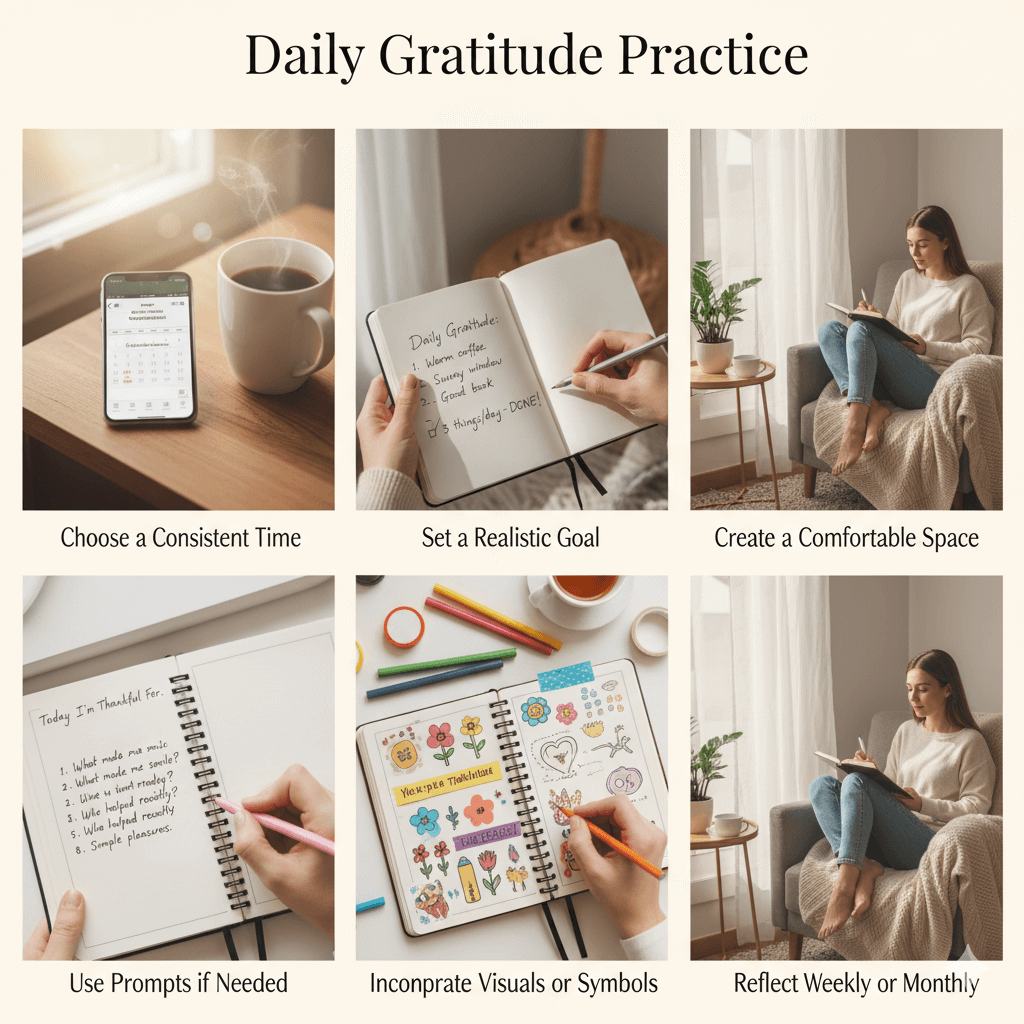
Here is a step-wise guide to setting a daily gratitude practice routine with explanations:
- Choose a Consistent Time:
Pick a specific time each day that fits your schedule, such as morning after waking or evening before sleep. Consistency helps form a lasting habit. - Set a Realistic Goal:
Start small with writing down 3 things you are grateful for daily. This keeps the practice manageable and reduces overwhelm. - Create a Comfortable Space:
Find a quiet, comfortable spot where you can reflect without distractions. This environment supports mindfulness and focus. - Use Prompts if Needed:
If unsure what to write, use prompts like “Today I’m thankful for…” or “What made me smile today?” to inspire your entries. - Involve Emotion and Detail:
Write why each item is meaningful to deepen your connection and increase the positive impact. - Incorporate Visuals or Symbols:
For physical journals, add drawings, photos, or stickers to enrich your experience and engagement. - Set Reminders or Alarms:
Use phone alarms or calendar alerts to remind you and keep your practice consistent. - Pair with Relaxation Techniques:
Combine journaling with meditation, deep breathing, or calming music to enhance mindfulness. - Reflect Weekly or Monthly:
Review your gratitude entries regularly to see growth and maintain motivation. - Adjust and Evolve:
Modify your routine as needed to keep it enjoyable and aligned with your lifestyle and goals.
Following these steps can build a strong, fulfilling gratitude habit that supports your mental and emotional well-being.
Best Time of Day to Write in Your Gratitude Journal

The best time of day to write in your gratitude journal depends on your personal routine and goals, but there are two popular options with unique benefits:
- Morning Journaling: Writing in the morning helps start your day with a positive mindset. It sets an optimistic tone, influences your mood, and encourages mindfulness throughout the day. Morning journaling can boost motivation and clarity before daily tasks.
- Evening Journaling: Reflecting at night allows you to review the day’s positive moments, promoting relaxation and better sleep. It helps release stress, appreciate the day’s experiences, and end on a note of gratitude and calmness.
Choose the time that best fits your schedule and encourages consistent practice. Some people even combine both for maximum impact.
How to Identify Things to Be Grateful For?

To identify things to be grateful for, start by paying close attention to the small, everyday moments that bring you joy or comfort. Consider relationships, personal qualities, experiences, nature, and simple pleasures like a warm cup of coffee or a kind gesture. Reflect on challenges you’ve overcome, as these can also be sources of gratitude for growth.
Another helpful approach is to ask yourself questions like, “What made me smile today?” or “Who helped me recently?” Using prompts or lists can spark awareness of blessings that might otherwise go unnoticed, enriching your gratitude practice.
Using Prompts to Inspire Your Gratitude Entries

Using prompts to inspire your gratitude entries can make journaling easier and more meaningful, especially when you’re unsure what to write. Prompts guide your focus, encouraging deeper reflection and helping you uncover aspects of life you might overlook. Examples include questions like “What made me smile today?”, “Who am I grateful for and why?”, or “What is something I take for granted but appreciate?”
Incorporating different prompts regularly keeps your practice fresh and engaging. You can create your own prompts based on your current goals or feelings, or use pre-made lists to spark new insights and gratitude perspectives
Writing with Emotion and Specificity

Writing with emotion and specificity enhances the impact of your gratitude journal entries. Instead of vague statements like “I’m grateful for my family,” describe specific moments or feelings, such as “I’m grateful for the way my sister listened to me today and made me feel supported.” This detailed expression deepens your emotional connection and makes the gratitude more real and powerful.
Expressing the emotions you felt—joy, relief, love—helps activate positive brain responses, strengthening the benefits of gratitude practice. The more vivid and heartfelt your writing, the more it rewires your mindset toward positivity and appreciation.
Combining Gratitude Journaling with Meditation

Combining gratitude journaling with meditation can deepen your sense of peace and appreciation. Begin your session with a few minutes of meditation to calm your mind and focus on the present moment. Use this quiet time to center your thoughts and open your heart to gratitude.
After meditation, write in your gratitude journal, capturing any positive feelings or insights that arose. This practice amplifies the emotional power of gratitude by engaging both mindfulness and reflective expression, helping you cultivate a sustained positive mindset throughout your day.
Conclusion

Embracing the practice of gratitude journaling is a simple yet profound step towards a more positive and fulfilling life. By consistently taking moments to acknowledge the blessings, big and small, you cultivate mindfulness, reduce stress, and strengthen your emotional resilience. Whether through quiet reflection, detailed entries, or combining it with meditation, a daily gratitude habit transforms your mindset, fostering lasting joy and appreciation. Start today and discover the profound impact of thankfulness on your overall well-being.