
Affirmations are more than just positive statements; they have a scientific basis that explains how they reshape our brain and mindset through neuroplasticity. Neuroplasticity is the brain’s natural ability to reorganize itself by forming new neural connections in response to learning and experience. When you consistently repeat affirmations, you strengthen beneficial neural pathways and weaken negative ones—like walking the same path that becomes clearer over time.
Ever wondered how affirmations actually change your brain?

Research using functional magnetic resonance imaging (fMRI) shows that self-affirmation activates key brain regions linked to self-processing, emotional regulation, and reward, such as the medial prefrontal cortex and ventral striatum. These areas also play roles in evaluating personal values and motivating behavior. Positive affirmations light up these areas and reduce activity in parts of the brain that deal with stress and self-criticism, such as the amygdala. This shift helps reduce anxiety and build emotional resilience.
How Affirmations Rewire the Brain
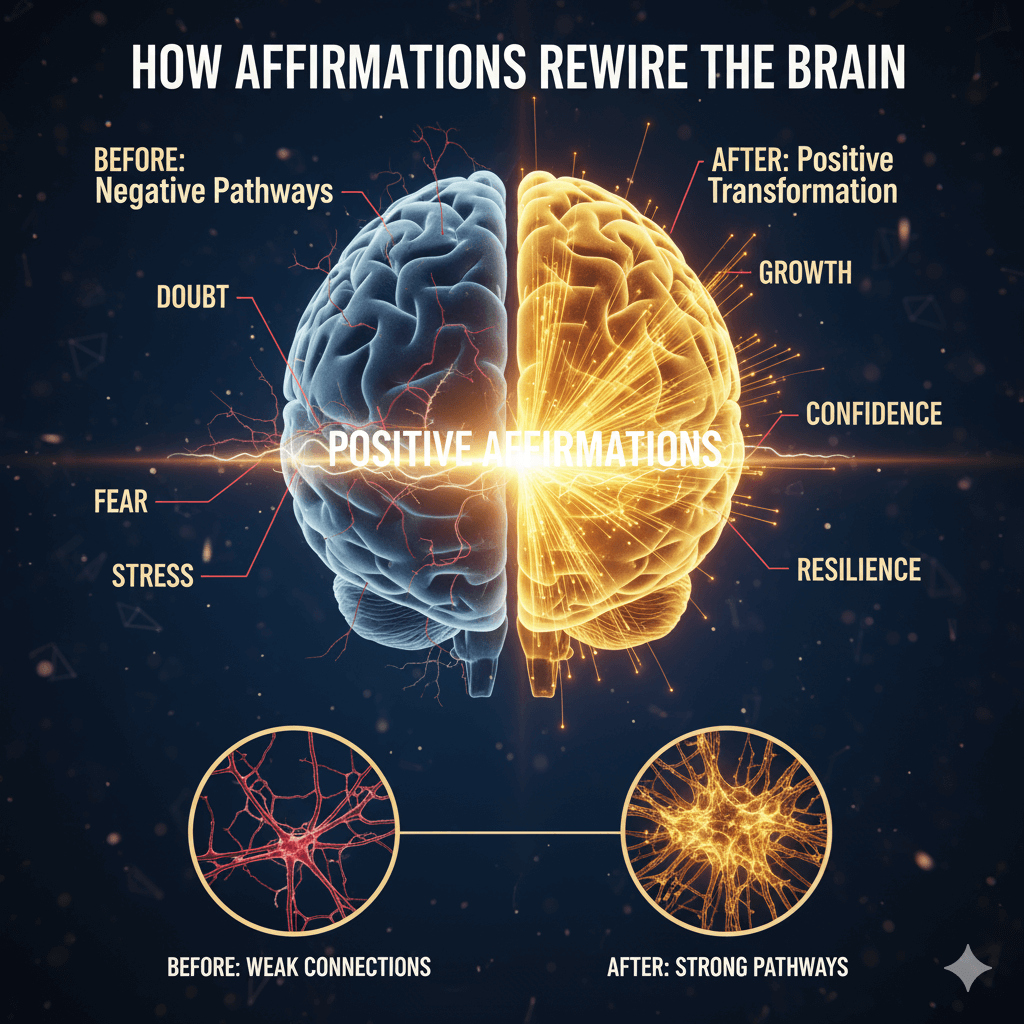
- Repetition Strengthens Neural Connections: Repeating affirmations regularly creates and reinforces positive pathways, making it easier to access encouraging thoughts automatically.
- Positive Language Boosts Brain Chemicals: Words used in affirmations stimulate dopamine and serotonin, neurotransmitters crucial for happiness and well-being.
- Reduces Negative Thought Patterns: Affirmations help quiet the brain’s default mode network, reducing harmful self-talk and pessimistic biases.
- Enhances Self-Perception: Affirmations promote a positive self-view, improving confidence and self-acceptance.
- Improves Stress Response: Affirmations help lower stress-related brain activity, promoting calm and better emotional regulation.
Practical Implications

Affirmations work best when personalized, emotionally charged, and practiced consistently, ideally during receptive states such as morning and before sleep. While affirmations can soften deep-rooted negative beliefs, severe or traumatic ingrained patterns might require complementary therapies like cognitive behavioral therapy (CBT).
In summary, affirmations leverage the brain’s plasticity to help you reshape your self-image, reduce stress, and foster mental resilience. They are powerful tools for personal growth backed by neuroscience, capable of turning positive intentions into lasting brain changes and improved life outcomes. By integrating affirmations into daily routines, you can actively transform your mindset and unleash your full potential.
How to Apply Science-Backed Affirmations in Your Daily Life
Understanding the neuroscience behind affirmations can transform how you practice them. Here’s a step-by-step guide to help you use affirmations effectively:
1. Personalize Your Affirmations

Scientific studies show personalized affirmations have a stronger impact because they resonate deeper with your values and beliefs. Reflect on what truly matters to you and tailor affirmations accordingly.
- Choose statements that reflect your unique goals.
- Avoid generic phrases that don’t feel authentic.
2. Use Present Tense and Positive Language

Affirmations work by telling your brain a new reality. Use present-tense, positive wording like “I am” or “I have” to align your subconscious with your desired mindset.
- Replace “I will” with “I am.”
- Avoid negations; focus on what you want.
3. Connect Emotionally

Activate brain regions associated with motivation and reward by adding feeling to your affirmations. Visualize the outcome and really feel the emotions linked to success or happiness.
- Imagine the positive feelings vividly.
- Include emotional words like “joyful,” “confident,” or “grateful.”
4. Practice Consistently

Repetition strengthens neural pathways. Commit to repeating your affirmations daily, ideally during receptive moments like morning and bedtime.
- Use reminders or alarms.
- Combine with meditation or deep breathing to enhance focus.
5. Monitor Your Progress

Neuroplasticity takes time. Track how your feelings and thoughts shift over time. Adjust affirmations if they no longer feel relevant or believable.
- Journal your experiences.
- Celebrate small shifts and wins.
By integrating these strategies, you leverage brain science to maximize the power of affirmations. Over time, consistent practice rewires your brain for positivity, resilience, and success—helping you unlock your full potential.