
Asking is the first step in manifestation because it creates clarity and direction for your intention. When you clearly ask for what you want, you move from vague desire to focused energy. The universe responds to clear signals, not silent wishes or confusion. Asking also helps your mind recognize what you are ready to receive. It shifts your energy from hoping to choosing. When you ask with calm confidence, your thoughts, emotions, and actions begin to align with the outcome. Manifestation begins the moment you express your intention clearly, because asking opens the door for opportunities, awareness, and inspired action to follow.
Why Most People Struggle to Ask
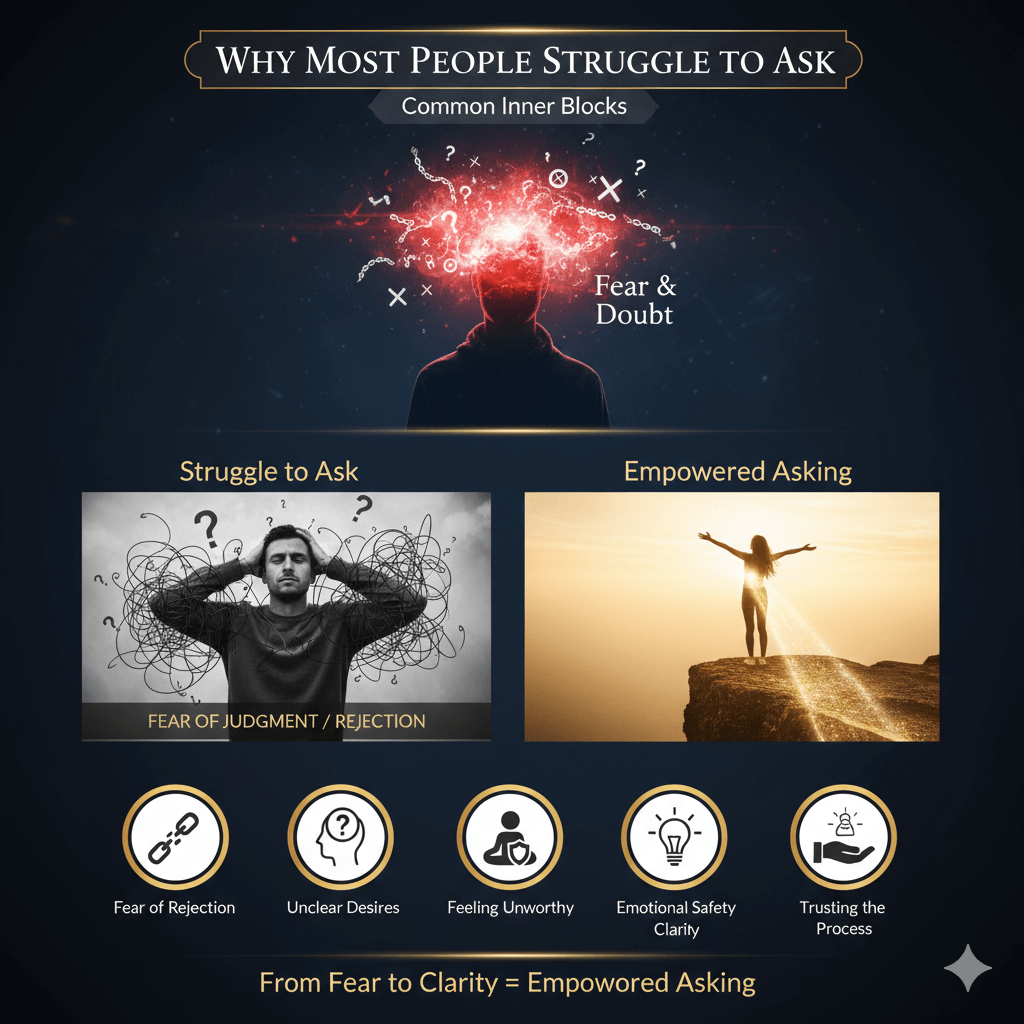
Many people struggle to ask because of fear, doubt, and past experiences. They may worry about being rejected, judged, or misunderstood. Some feel unworthy of receiving what they want, while others are unsure about their desires. When the mind is filled with uncertainty, asking feels uncomfortable or risky. Past disappointments can also make people believe that asking will not make a difference. This creates hesitation and silence instead of clear expression. Asking requires confidence and emotional safety, and when these are missing, people hold back. Understanding these inner blocks helps you move from fear to clarity, making it easier to express your needs and intentions.
Common Reasons People Struggle to Ask
- Fear of rejection or judgment
Many people worry that their request will be refused or criticized. This fear creates hesitation, making them avoid asking even when opportunities are available. Over time, this reinforces the belief that it is safer to stay silent. - Feeling unworthy of receiving
Some individuals believe they do not deserve success, support, or recognition. This subconscious belief prevents them from asking clearly because they doubt whether they are allowed to receive what they want. - Lack of clarity about what they want
When goals or desires are unclear, asking becomes difficult. The mind hesitates because it does not know what to request, leading to vague intentions or avoidance. - Past disappointments create hesitation
Previous experiences of failure or rejection can make people assume asking will not work. This creates emotional resistance and reduces confidence in expressing needs.
Asking from Lack vs Asking from Alignment

The way you ask matters as much as what you ask for. Asking from lack comes from fear, desperation, or the feeling that something is missing. This energy creates pressure and doubt, which can block clarity and confidence. Asking from alignment comes from calm belief and emotional balance. It is the feeling that you are ready to receive, not begging to receive. When you ask from alignment, your thoughts, emotions, and intentions feel steady and clear. This makes your request feel natural and believable. The universe responds more easily when your energy reflects trust instead of urgency or fear.
Key Differences Between Lack and Alignment
- Asking from lack feels urgent and pressured
When you ask from lack, your mind focuses on what is missing. This creates emotional tension and fear of not receiving, which weakens confidence and clarity. - Asking from alignment feels calm and confident
Aligned asking comes from a sense of readiness. You feel emotionally steady and open, which makes your intention clear and strong without pressure. - Lack energy focuses on problems, alignment focuses on possibilities
When asking from lack, attention stays on what is wrong. Alignment shifts focus toward solutions and desired outcomes, creating a more positive mindset. - Aligned asking encourages inspired action
When you feel balanced, you naturally take steps that support your request. Lack-based asking often leads to hesitation or overthinking instead of action.
The Energy Behind Your Request
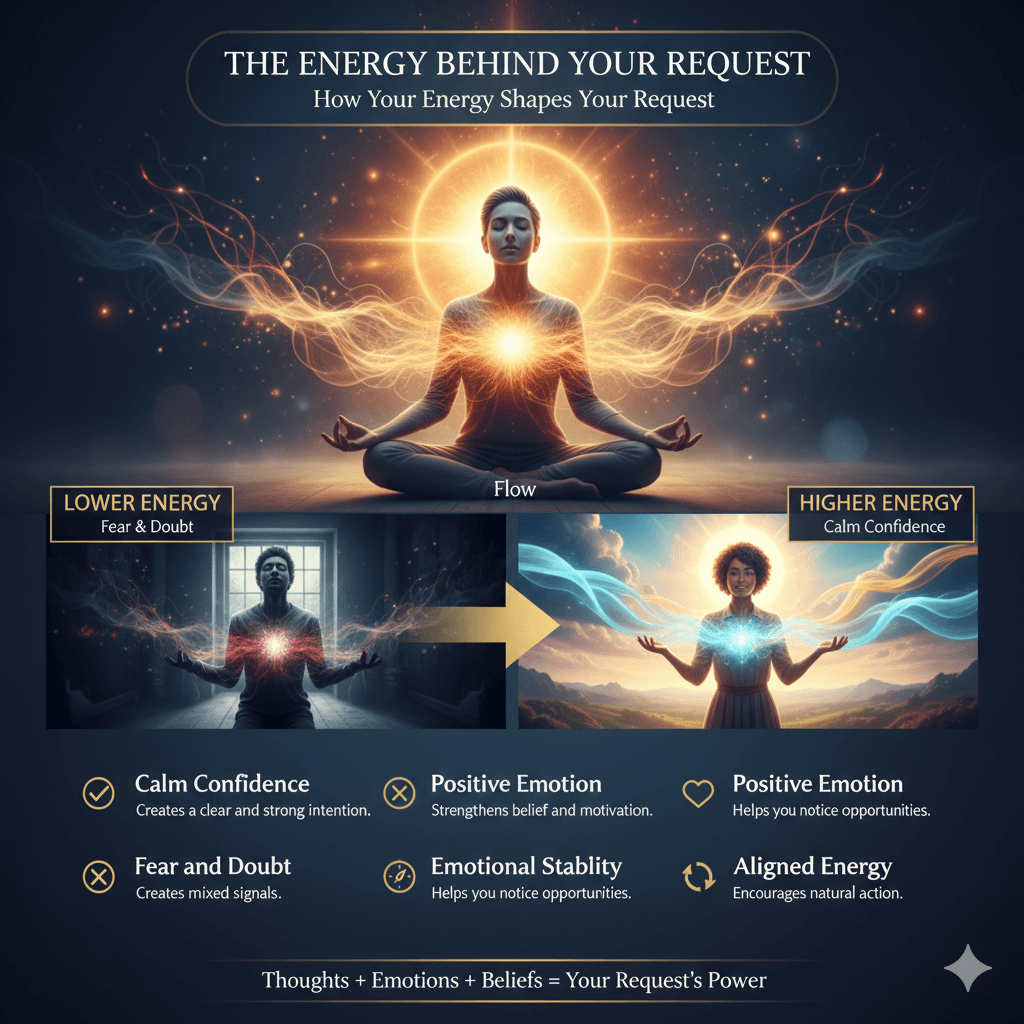
When you ask for something, the energy behind your request matters more than the words themselves. Energy is created by your thoughts, emotions, and beliefs at the moment you ask. If your request comes from fear, doubt, or desperation, the mind sends mixed signals, making it harder to stay confident or take aligned action. When your request comes from calm belief and emotional balance, the intention feels clear and steady. This positive energy helps your mind stay focused and open to opportunities. The universe responds more easily when your request feels natural instead of forced. Energy does not mean being overly positive—it means feeling emotionally stable and trusting the direction. When your thoughts, feelings, and intention match, your request becomes powerful. This alignment makes you more aware of possibilities and encourages actions that support the outcome.
How Your Energy Shapes Your Request
- Calm confidence creates a clear and strong intention
When you ask with a relaxed and confident mindset, your thoughts feel focused and steady. This makes your intention easier to act on. Example: Raj asked for a new opportunity at work while feeling prepared and confident, which helped him communicate clearly and receive support. - Fear and doubt create mixed signals
If you ask while worrying about failure, your mind stays uncertain and hesitant. This reduces clarity. Example: Maria wanted to start a business but kept doubting herself, which delayed her decisions until she worked on building confidence first. - Positive emotion strengthens belief and motivation
Feelings like gratitude or excitement make your request feel meaningful. This encourages consistent effort. Example: Priya felt grateful for her learning journey, which kept her motivated to study daily instead of feeling pressured. - Emotional stability helps you notice opportunities
When your energy is calm, you become more aware of helpful people and ideas. Example: Raj stayed open and relaxed after asking for growth, which helped him recognize a new project opportunity. - Aligned energy encourages natural action
When thoughts and emotions are balanced, actions feel easier instead of forced. Example: Maria asked for clarity about her career and calmly explored options, leading her to a role that suited her skills.
The Role of the Subconscious Mind in Receiving
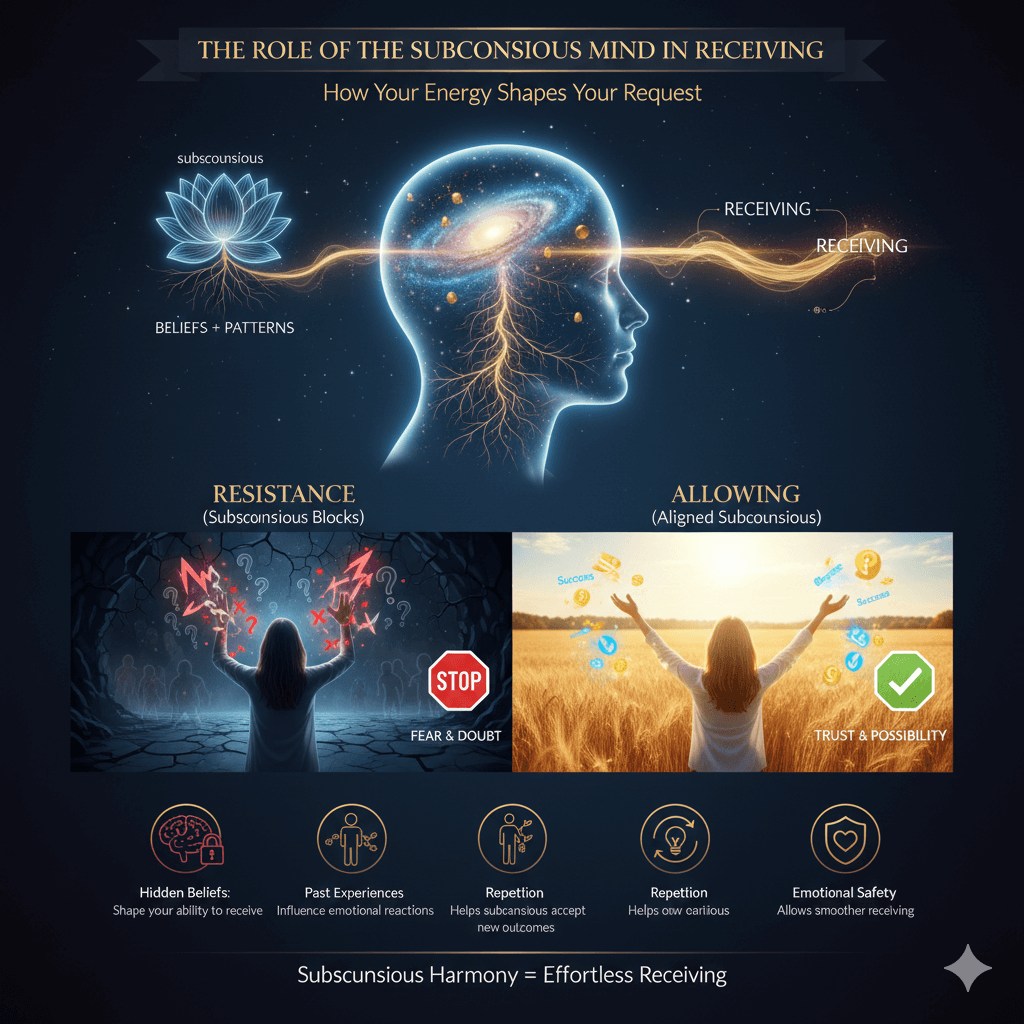
The subconscious mind plays a major role in whether you can receive what you ask for. It stores your beliefs, past experiences, and emotional patterns. If the subconscious associates success or change with fear, pressure, or disappointment, it may create resistance even when you consciously want something. This is why some people ask for opportunities but hesitate when they appear. When the subconscious feels safe and believes the result is possible, it supports your actions and decisions naturally. By repeating positive thoughts with calm emotion and building small wins, you help the subconscious accept new outcomes, making receiving feel normal instead of uncomfortable.
How the Subconscious Influences Receiving
- Hidden beliefs shape your ability to receive
The subconscious compares your request with existing beliefs about what you deserve. If you believe success is difficult or risky, resistance appears. Example: Raj wanted a promotion but doubted his ability, which made him avoid opportunities until he worked on building confidence. - Past experiences influence emotional reactions
Memories of failure or criticism can create hesitation when new opportunities appear. Example: Maria felt nervous about starting her business because of past setbacks, but small successes helped her rebuild trust. - Repetition helps the subconscious accept new outcomes
When you repeatedly think about your goal with calm emotion, the subconscious begins to treat it as familiar. Example: Priya visualized completing her exam confidently, which reduced anxiety and improved her focus. - Emotional safety allows smoother receiving
When the nervous system feels calm, the subconscious lowers its protective response. This makes it easier to accept growth and new opportunities without fear or avoidance.
The Nervous System and Emotional Safety

The nervous system plays a key role in how safe you feel while asking and receiving. When the body feels safe, the mind becomes calm, clear, and open to new possibilities. This state allows you to express your intentions with confidence and trust. When the nervous system is stressed, it enters fight-or-flight mode, where the brain focuses on protection instead of growth. In this state, asking can feel uncomfortable, and receiving may trigger doubt or fear. Emotional safety does not mean everything is perfect—it means your body feels stable enough to handle change. Practices like slow breathing, silence, and calm thinking help the nervous system relax. When your nervous system feels safe, your thoughts become clearer, your emotions stabilize, and your actions feel more natural. This balanced state makes it easier to ask without fear and receive without resistance.
How Emotional Safety Supports Asking and Receiving
- A calm nervous system improves confidence while asking
When your body is relaxed, your voice and thoughts feel steady. This helps you express your needs clearly. Example: Raj took slow breaths before asking for feedback at work, which helped him speak confidently instead of feeling nervous. - Stress triggers fear and hesitation
When the body feels pressured, the brain focuses on protection, making asking feel risky. Example: Maria avoided discussing her ideas when she felt stressed, but after calming herself, she communicated more openly. - Emotional safety reduces resistance to opportunities
When you feel safe, you are more willing to accept new experiences. Example: Priya felt calm during a new project, which allowed her to accept responsibility without self-doubt. - Calm states improve clarity and decision-making
When the nervous system is balanced, the mind can think clearly and respond thoughtfully. Example: Raj made better career decisions after practicing short relaxation techniques. - Regular calming practices build long-term resilience
Daily breathing or quiet moments train the nervous system to recover from stress faster. Example: Maria practiced short silence breaks, which helped her stay emotionally balanced during busy days.
Clarity: Knowing Exactly What You Want

Clarity is essential when asking because clear intentions create clear direction. When you know exactly what you want, your thoughts become focused and your actions become purposeful. Without clarity, requests remain vague, and results often feel uncertain. Clarity helps your mind recognize opportunities that match your goals and reduces confusion or hesitation. It also strengthens confidence because you are no longer guessing about your direction. Knowing what you want does not mean knowing every step—it means having a clear outcome in mind. When your intention is specific and meaningful, your energy becomes aligned, making it easier to ask, act, and receive naturally.
How Clarity Strengthens Your Asking
- Clear goals reduce confusion and hesitation
When you know what you are aiming for, your mind stops second-guessing decisions. This makes it easier to take action. Example: Raj defined his goal to improve leadership skills, which helped him choose relevant tasks instead of feeling uncertain. - Specific intentions improve focus and direction
Clarity helps you concentrate on what truly matters instead of getting distracted by less important tasks. Example: Maria clearly decided to grow her client base, which helped her prioritize outreach instead of multitasking. - Clarity increases confidence while asking
When your intention is clear, you express your needs more confidently because you understand your purpose. Example: Priya clearly asked for guidance in her studies, which helped her receive the right support. - Focused intentions help you recognize opportunities
When your mind knows what to look for, you naturally notice helpful resources or connections. Example: Raj noticed a training opportunity because he had a clear growth goal in mind.
Speak Like It’s Possible, Not Impossible
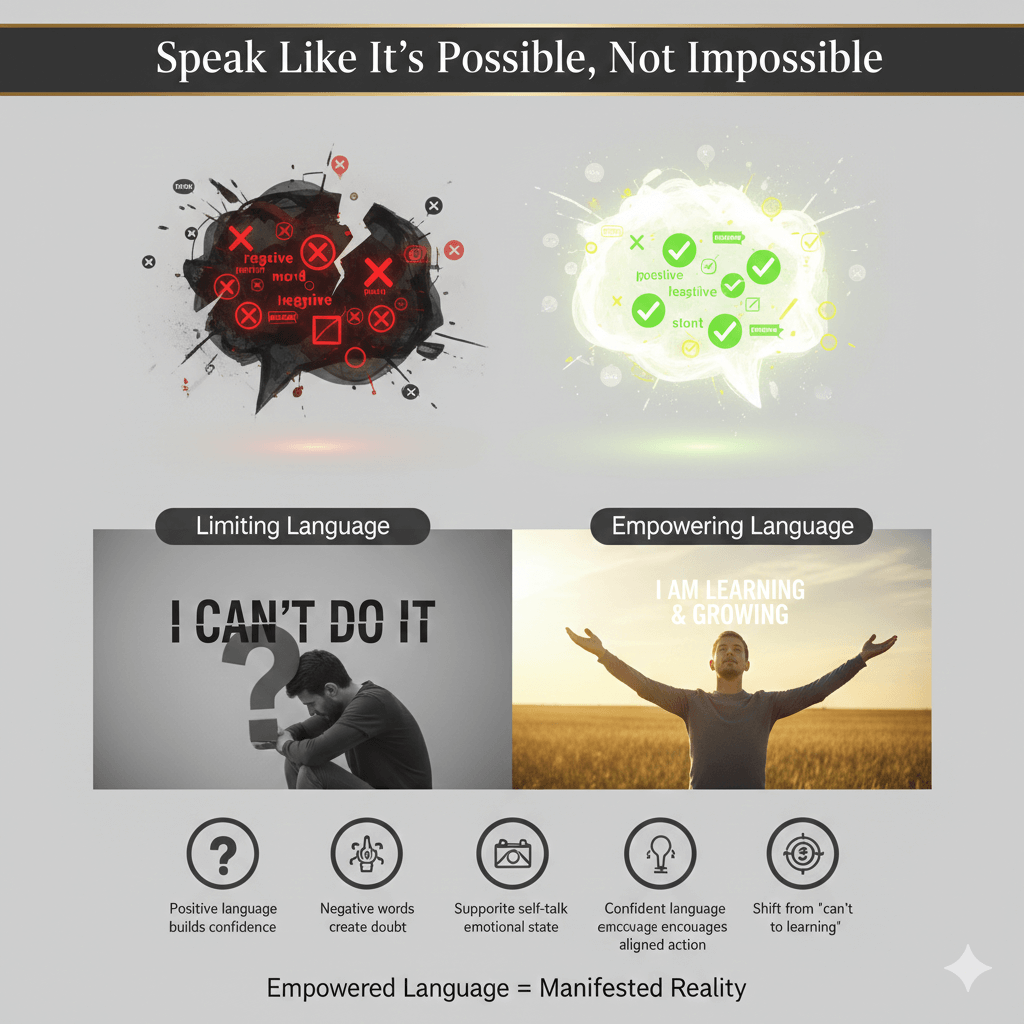
The way you speak about your goals shapes how you think and feel about them. When you speak as if something is possible, your mind becomes more open and confident. Speaking with doubt or negativity creates hesitation and weakens belief. Positive language does not mean ignoring challenges—it means choosing words that support growth instead of limitation. When you speak with calm confidence, your thoughts and emotions align with your intention. This makes your actions feel more natural and focused. By shifting your language from “I can’t” to “I am learning” or “I am working toward,” you create a mindset that supports progress and opportunity.
How Language Shapes Your Reality
- Positive language builds confidence and belief
When you speak in supportive words, your mind begins to accept success as possible. Example: Raj replaced “I am not ready” with “I am improving,” which helped him approach new challenges with confidence. - Negative words create doubt and hesitation
Speaking in limiting language reinforces fear and reduces motivation. Example: Maria often said “This will never work,” which made her delay action until she shifted to more encouraging language. - Supportive self-talk improves emotional state
Encouraging words calm the mind and reduce stress, making it easier to focus. Example: Priya told herself “I can handle this step by step,” which helped her stay calm during exams. - Confident language encourages aligned action
When your words reflect belief, your actions become more decisive. Example: Raj spoke about his goals with confidence, which helped him take consistent steps toward progress.
Releasing Control After Asking
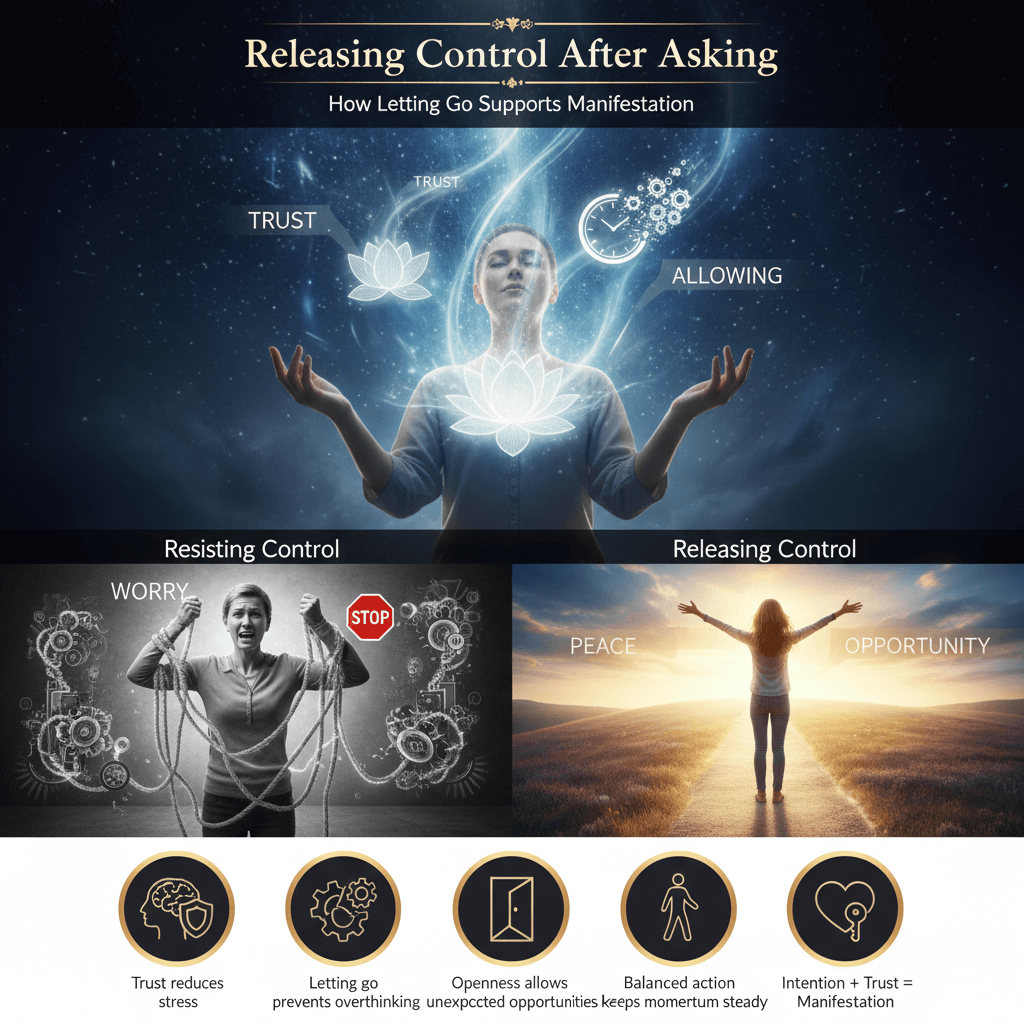
Releasing control after asking is an important part of manifestation. Once you clearly express your intention, constantly worrying about how or when it will happen can create stress and resistance. Letting go does not mean giving up—it means trusting the process while continuing to take calm, inspired action. When you release the need to control every detail, your mind becomes relaxed and open to possibilities you may not have considered. This trust reduces overthinking and allows opportunities to appear naturally. By asking clearly and then allowing space, you create balance between intention and trust, making it easier for results to unfold.
How Letting Go Supports Manifestation
- Trust reduces stress and mental pressure
When you stop trying to control every step, your mind relaxes and becomes more focused. Example: Raj asked for a new opportunity and then focused on improving his skills instead of worrying daily about outcomes. - Letting go prevents overthinking
Constantly checking results creates anxiety and doubt. Trusting the process helps maintain emotional balance. Example: Maria stopped obsessing over immediate results and allowed her business progress to unfold naturally. - Openness allows unexpected opportunities
When you release rigid expectations, you become more open to different paths toward your goal. Example: Priya discovered a better study method after letting go of strict routines. - Balanced action keeps momentum steady
Letting go does not mean inaction—it means continuing to move forward calmly. Example: Raj kept taking small steps toward growth without forcing immediate results.
Practical Daily Practices to Strengthen Your Asking Power
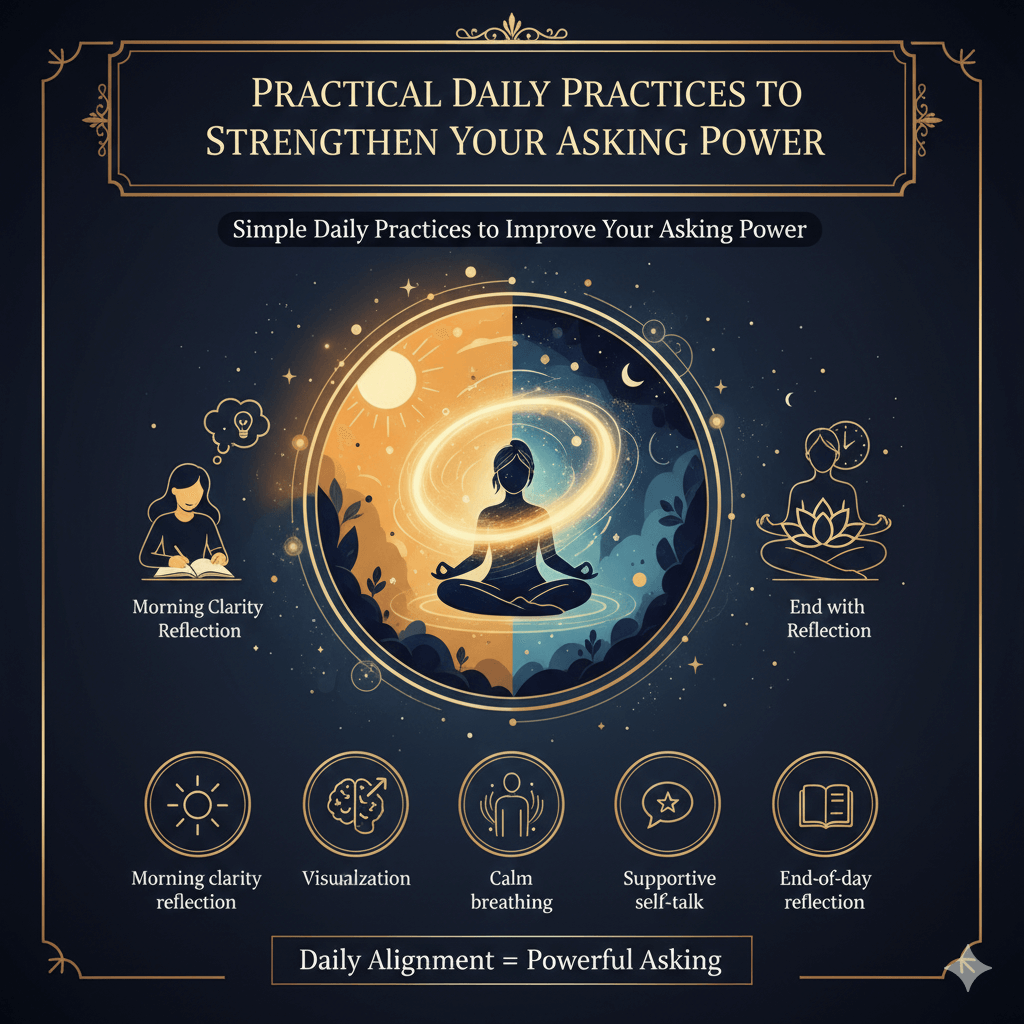
Strengthening your asking power comes from simple daily habits that build clarity, confidence, and emotional balance. Asking becomes easier when your mind is calm and your intention is clear. Small practices help you understand what you truly want and express it without fear or hesitation. These habits train your thoughts and emotions to stay aligned with your goals instead of reacting with doubt. Consistency is more important than intensity. Even a few minutes each day of reflection or visualization can improve your confidence while asking. Over time, these practices reduce fear of rejection, increase self-belief, and help you communicate your needs more clearly. By building emotional stability and mental clarity, you naturally ask with confidence instead of uncertainty. Daily alignment practices create the inner foundation needed to express intentions and receive opportunities more comfortably.
Simple Daily Practices to Improve Your Asking Power
- Morning clarity reflection
Spend a few minutes identifying what you truly want for the day or long term. This helps your mind stay focused. Example: Raj wrote one clear intention each morning, which helped him communicate his needs confidently instead of feeling unsure. - Visualization of positive outcomes
Imagine yourself asking calmly and receiving support. This builds emotional confidence. Example: Maria visualized a successful conversation before meetings, which reduced her fear and improved her communication. - Practice calm breathing before important conversations
Slow breathing relaxes the nervous system and reduces anxiety. Example: Priya took a few deep breaths before asking for guidance, helping her speak clearly instead of feeling nervous. - Use supportive self-talk throughout the day
Encourage yourself with positive language to build belief. Example: Raj told himself “It’s okay to ask,” which reduced hesitation and improved confidence. - End the day with a small reflection
Notice moments when you expressed yourself clearly. This reinforces progress. Example: Maria wrote one daily win about speaking up, which gradually strengthened her comfort with asking.
Common Mistakes When Asking the Universe

Many people feel that asking the universe is not working, but often the issue is not the request—it is the approach. When intentions are mixed with fear, doubt, or impatience, the mind sends unclear signals. Asking should come from calm belief, not pressure or desperation. Common mistakes include focusing too much on what is missing, constantly worrying about results, or changing intentions frequently. These patterns create confusion and emotional resistance. Understanding these mistakes helps you shift your mindset and ask with clarity and confidence. When your thoughts, emotions, and intentions align, asking becomes more powerful and natural.
Common Mistakes to Avoid
- Asking with fear or desperation
When you ask while feeling anxious or pressured, your mind focuses on lack instead of possibility. Example: Raj worried constantly about results, which increased stress until he shifted to asking with calm confidence. - Constantly doubting your request
Repeatedly questioning whether your goal is possible weakens belief. Example: Maria kept changing her intentions, which created confusion until she committed to one clear direction. - Trying to control how results will happen
Over-controlling the process creates stress and blocks openness. Example: Priya expected results in a specific way and felt frustrated until she allowed flexibility. - Focusing on what is missing instead of what is possible
Attention on lack increases negativity and reduces motivation. Example: Raj focused on problems instead of progress, which slowed his confidence. - Impatience and expecting instant results
Manifestation takes time and consistent alignment. Example: Maria felt discouraged quickly until she learned to trust gradual progress.
Conclusion: Ask Clearly, Receive Naturally
Manifestation becomes easier when you learn to ask with clarity, calm confidence, and trust. When your thoughts, emotions, and intentions are aligned, asking feels natural instead of forced. Clear asking reduces confusion and helps your mind recognize opportunities that support your goals. It also encourages steady action without pressure. Receiving is not about controlling outcomes but about staying open and balanced while moving forward. By expressing your desires clearly and trusting the process, you create space for growth and positive change. When you ask from alignment instead of fear, you naturally become more aware, confident, and ready to receive what you truly desire.
Amazon Echo Pop Smart Speaker with Alexa — Small Size, Big Smart Features

Looking for an affordable smart speaker that delivers great sound and powerful voice control? The Amazon Echo Pop Smart Speaker with Alexa is the perfect entry point into smart living. With its compact design, clear audio, and Alexa voice assistant, you can control your home, enjoy music, and stay organized — all hands-free.
👉 Perfect for bedrooms, study rooms, offices, and small living spaces.
⭐ Why Amazon Echo Pop is a Best-Selling Smart Speaker

The Echo Pop combines style, performance, and affordability, making it one of the most popular smart speakers for modern homes. Whether you’re new to smart devices or expanding your setup, it delivers excellent value.
✔ Compact and modern design
✔ Clear, room-filling sound
✔ Built-in Alexa voice assistant
✔ Smart home control hub
✔ Quick and easy setup
✔ Affordable price
🔊 Rich Sound for Music, Podcasts & More

Enjoy crisp vocals and balanced bass while streaming your favorite music, audiobooks, or podcasts. Perfect for everyday listening without taking up much space.
Stream from:
✅ Amazon Music
✅ Spotify
✅ JioSaavn
✅ Apple Music
✅ Podcasts & Radio
🗣️ Alexa Makes Life Easier
Just ask Alexa to:
✔ Play music
✔ Set alarms and reminders
✔ Check weather and news
✔ Answer questions instantly
✔ Control smart home devices
✔ Create shopping lists
Alexa helps you stay organized and productive throughout the day.
🏠 Turn Your Home into a Smart Home
Control compatible smart devices using voice commands. Turn lights on/off, control plugs, and automate routines effortlessly.
Great for beginners starting their smart home journey.
🔐 Built-In Privacy Protection
Amazon prioritizes your privacy with multiple controls including a microphone off button so you can disconnect microphones anytime.
📦 What’s Included in the Box
- Echo Pop Smart Speaker
- Power Adapter
- Quick Start Guide
💡 Who Should Buy Echo Pop?
✅ First-time smart speaker users
✅ Budget-friendly smart home setup
✅ Students and professionals
✅ Small room audio solution
✅ Anyone who wants Alexa at home