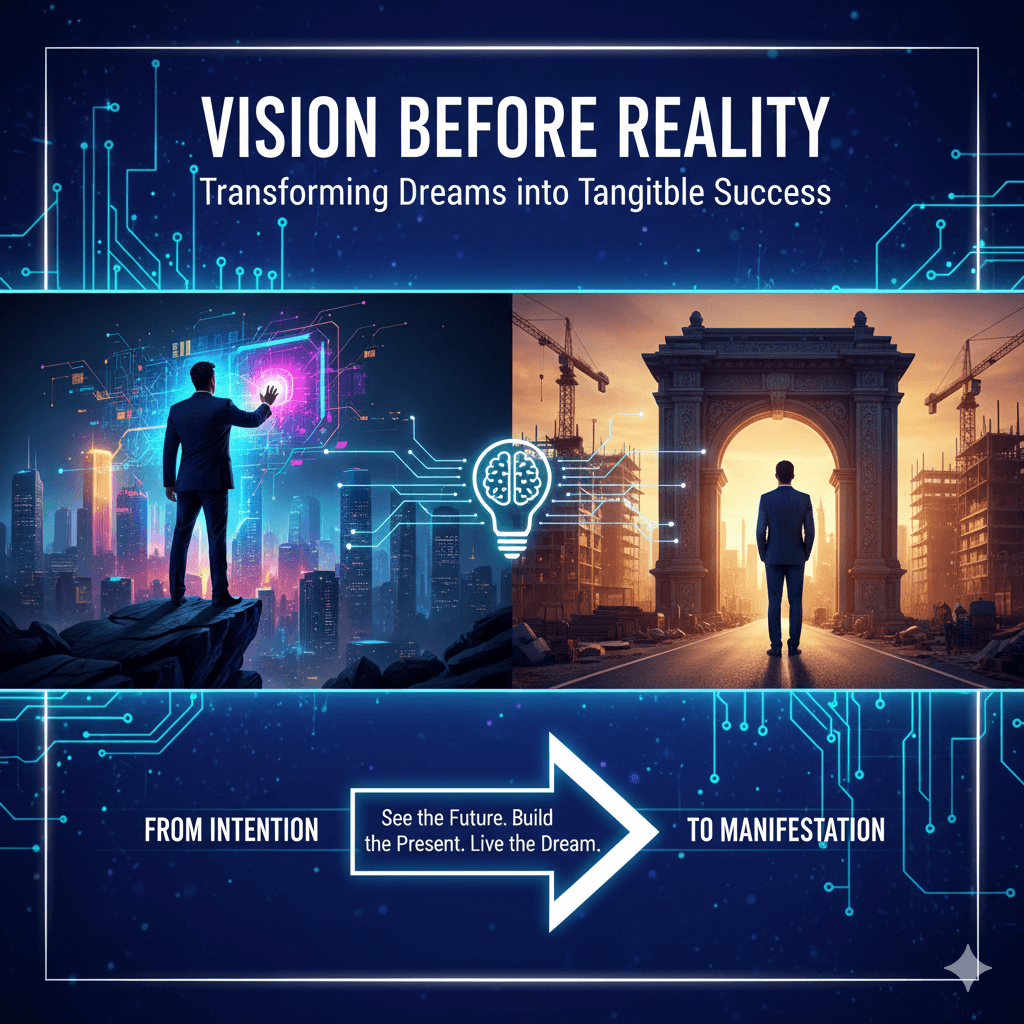
Introduction:
“Vision Before Reality” means seeing your desired result clearly in your mind before it appears in real life. It is the practice of mentally imagining the outcome as possible and achievable. When you repeatedly visualize a goal with calm focus, your mind begins to treat it as familiar instead of distant. This reduces fear and hesitation, making your actions more confident and purposeful. Vision does not replace effort—it guides it. By holding a clear mental picture of success, your thoughts, emotions, and decisions naturally start aligning with the direction of that result.
Why the Brain Responds Strongly to Mental Images
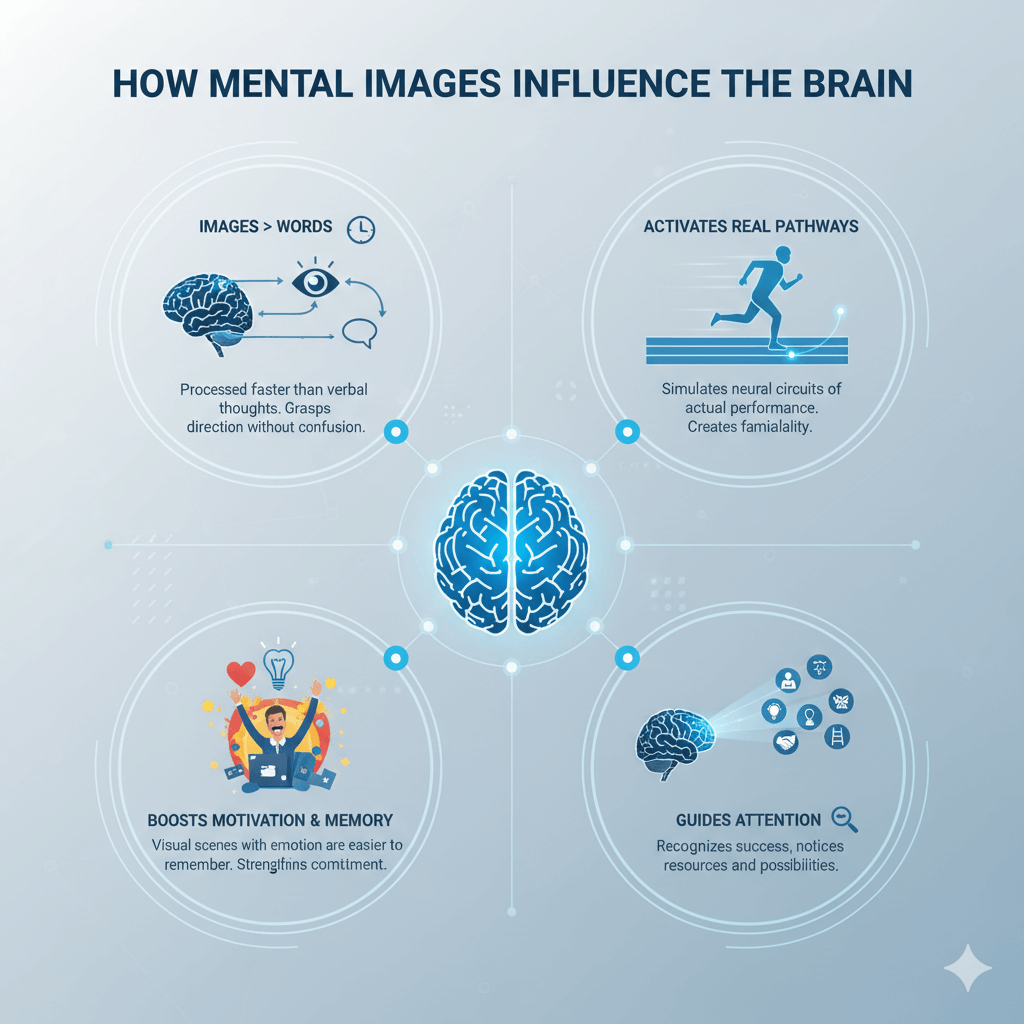
The brain responds strongly to mental images because it processes pictures faster than words. When you imagine something clearly, the brain activates many of the same areas it uses during real experiences. This makes the situation feel familiar and believable. Clear mental images help the mind understand the goal, reduce uncertainty, and prepare the body for action. Visualization also creates emotional involvement, which strengthens memory and motivation. Instead of abstract ideas, the brain prefers concrete pictures. When you repeatedly see a positive outcome in your mind, the brain begins to treat it as possible, guiding your attention and behavior toward that direction.
How Mental Images Influence the Brain .
- Images are processed faster than verbal thoughts
The brain naturally understands visual information more quickly than long explanations. When you picture a goal clearly, your mind grasps the direction without confusion, making it easier to focus and reduce overthinking. - Visualization activates real experience pathways
When you imagine an action, the brain stimulates similar neural circuits used in actual performance. This creates familiarity and reduces fear when you later take real steps. - Clear images improve motivation and memory
Visual scenes with emotion are easier for the brain to remember. This strengthens commitment and keeps your goal present in daily decisions. - Mental pictures guide attention toward opportunities
Once the brain recognizes a clear image of success, it begins noticing resources and possibilities that support that outcome.
Visualization vs Imagination – The Key Difference
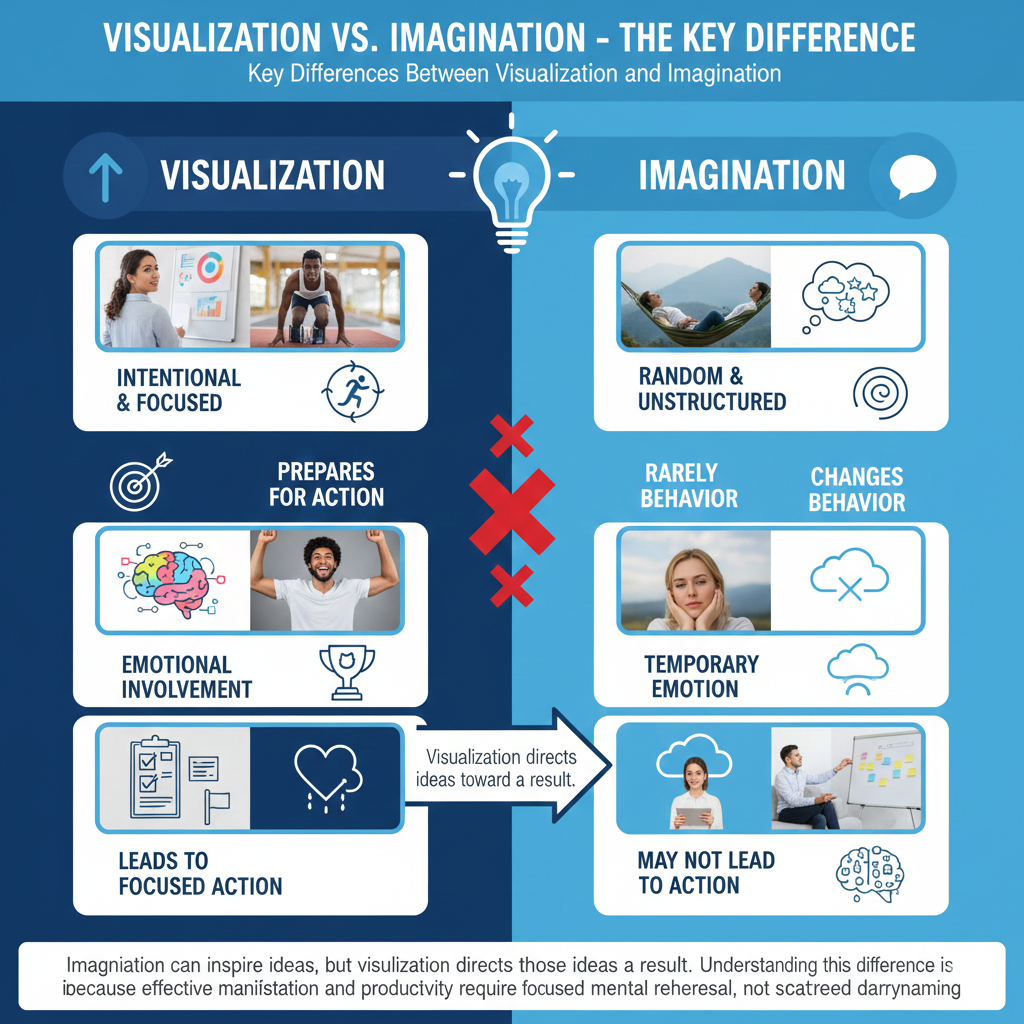
Visualization and imagination may sound similar, but they are used in different ways. Imagination is often random and unstructured. It can include daydreaming, fantasy, or thoughts that are not connected to a clear goal. Visualization, on the other hand, is intentional and focused. It involves creating a clear mental picture of a specific outcome you want to achieve. Visualization is used to prepare the mind for real action, while imagination is usually for creativity or entertainment. When you visualize, you also involve emotions, belief, and purpose, which makes the experience feel real and meaningful. This helps the brain treat the goal as familiar and achievable. Imagination can inspire ideas, but visualization directs those ideas toward a result. Understanding this difference is important because effective manifestation and productivity require focused mental rehearsal, not scattered daydreaming.
Key Differences Between Visualization and Imagination
- Visualization is intentional, while imagination is often random
Visualization is done with a clear purpose and specific goal in mind. You consciously create a mental image of the desired outcome. Imagination can happen automatically without direction, producing thoughts that may be unrelated to real-world action. - Visualization prepares the mind for real performance
When you visualize, the brain rehearses the experience as if it is happening. This builds familiarity and confidence before taking action. Imagination usually does not include preparation for execution, so it rarely changes behavior directly. - Visualization includes emotional involvement and belief
Effective visualization combines clear images with calm confidence and positive emotion. This strengthens motivation and commitment. Imagination may include emotion, but it is often temporary and not connected to consistent effort or results. - Visualization leads to focused action, imagination may not
Visualization helps you identify practical steps toward the goal because the destination is clear. Imagination can remain as pleasant thinking without translating into decisions or progress.
How Visualization Programs the Subconscious Mind
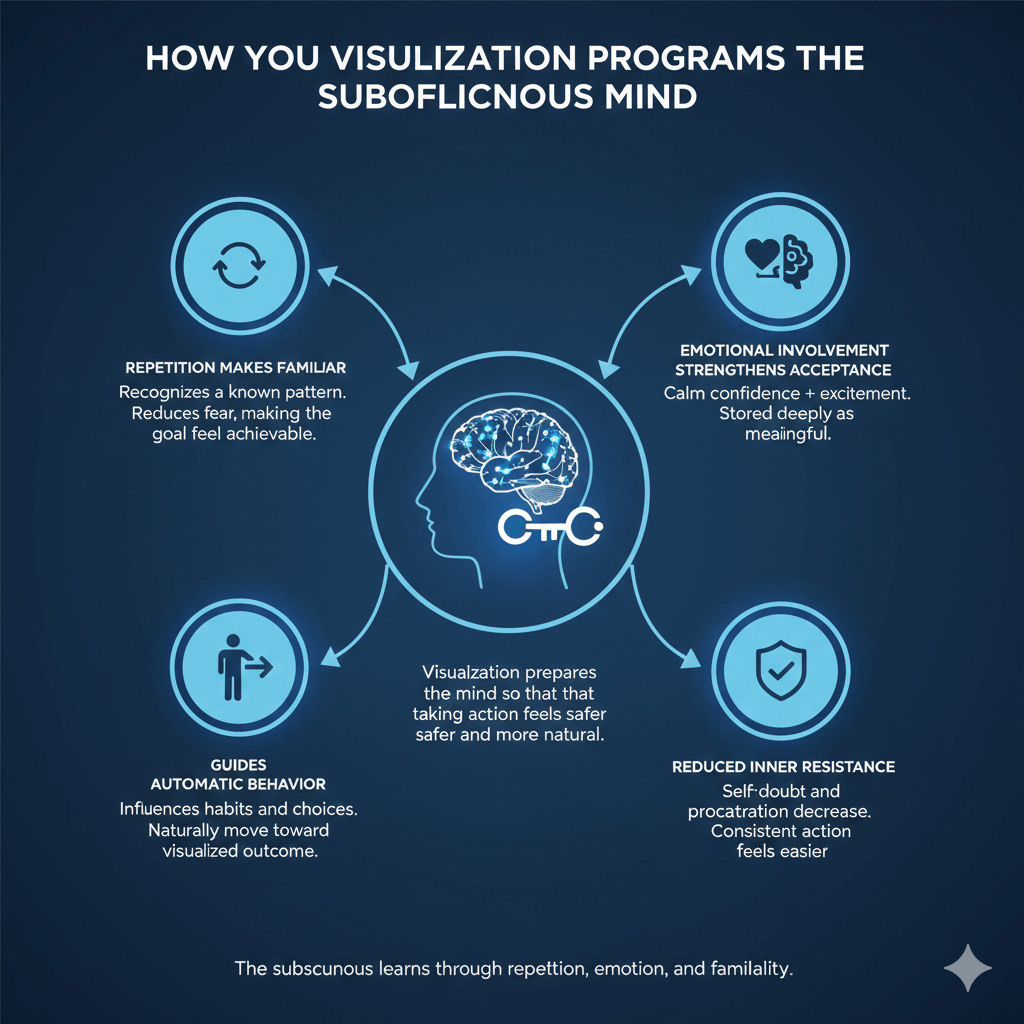
Visualization programs the subconscious mind by repeatedly showing it a clear picture of the desired result. The subconscious learns through repetition, emotion, and familiarity—not logic alone. When you imagine a goal with calm focus and positive feeling, the mind begins to treat that outcome as normal and possible. Over time, this reduces inner resistance and self-doubt. The subconscious then starts guiding your behavior, attention, and decisions toward actions that match the visualized result. Visualization does not replace effort; it prepares the mind so that taking action feels safer and more natural, making consistent progress easier.
How Visualization Influences the Subconscious
- Repetition makes the imagined result feel familiar
When you repeatedly visualize the same positive outcome, the subconscious begins to recognize it as a known pattern. Familiarity reduces fear and hesitation, making the goal feel less risky and more achievable. - Emotional involvement strengthens acceptance
When visualization includes calm confidence or excitement, the subconscious receives a stronger signal. Emotions act like a memory marker, helping the mind store the image more deeply and treat it as meaningful. - Clear mental images guide automatic behavior
Once the subconscious accepts the picture, it starts influencing habits and choices without constant effort. You naturally move toward actions that match the visualized outcome. - Reduced inner resistance allows smoother progress
As the subconscious becomes comfortable with the new result, self-doubt and procrastination decrease. This makes consistent action feel easier and more aligned.
Emotional Involvement Makes Vision Powerful
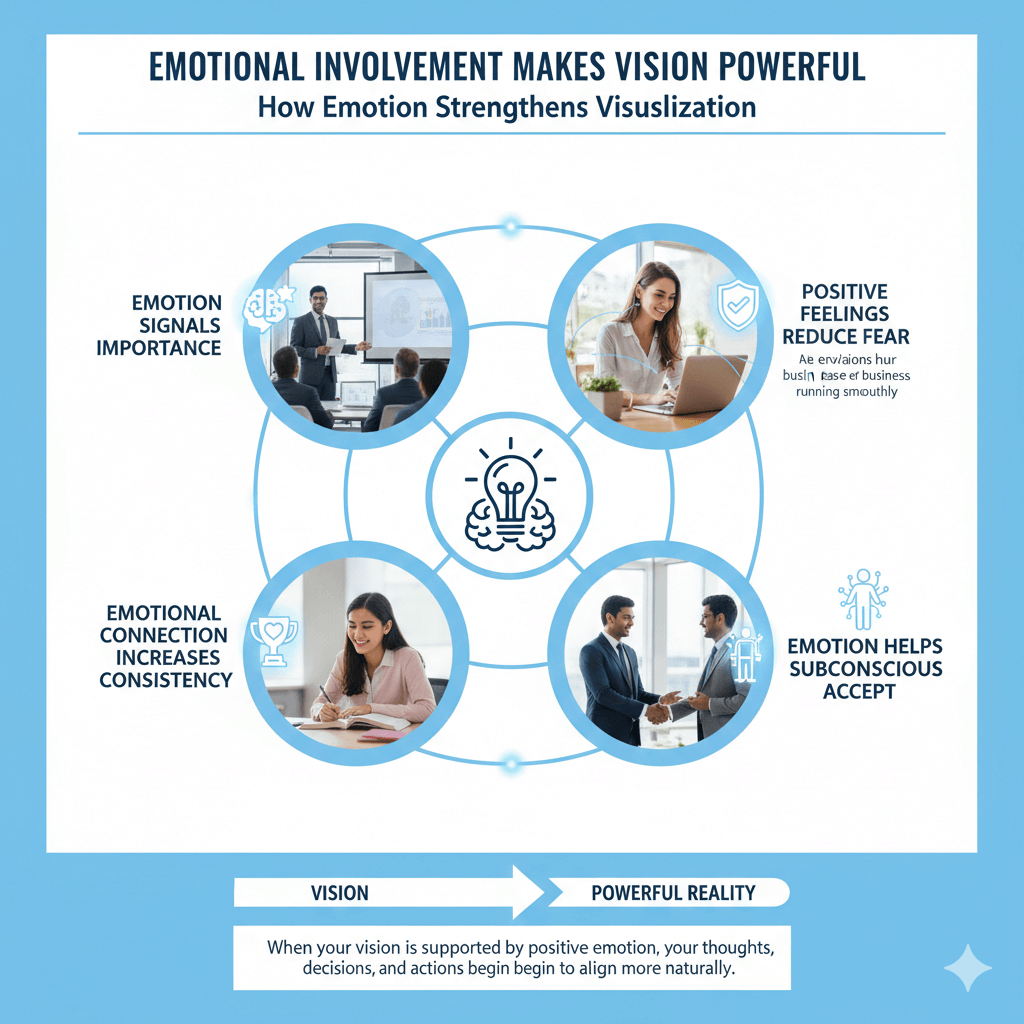
Visualization becomes truly powerful when it includes emotion, not just mental pictures. The brain remembers and accepts experiences that carry feeling. When you imagine your goal with calm confidence, excitement, or gratitude, the mind treats it as meaningful and real. This emotional connection reduces doubt and increases motivation. Without emotion, visualization stays like a distant idea. With emotion, it becomes a personal experience that the subconscious can accept. Emotional involvement also helps you stay consistent because you feel connected to the result. When your vision is supported by positive emotion, your thoughts, decisions, and actions begin to align more naturally.
How Emotion Strengthens Visualization
- Emotion signals importance to the brain
When you feel something while visualizing, the brain marks that image as meaningful. This strengthens memory and focus. Example: Raj imagined successfully completing his presentation and felt relief and pride, which motivated him to practice daily instead of postponing preparation. - Positive feelings reduce fear and resistance
Calm or confident emotions make the goal feel safe rather than risky. This lowers hesitation. Example: Maria visualized her business running smoothly with a sense of ease, which reduced her fear of starting and helped her take the first small steps. - Emotional connection increases consistency
When you feel excited or grateful about the result, you naturally return to the vision often. Example: Priya imagined receiving her exam results with happiness, which encouraged her to study regularly instead of relying on last-minute effort. - Emotion helps the subconscious accept the vision as real
The subconscious responds more to feelings than logic. When visualization includes genuine emotion, belief grows naturally. Example: Raj felt confident while picturing his promotion, which improved his body language and performance at work.
The Nervous System and Mental Rehearsal
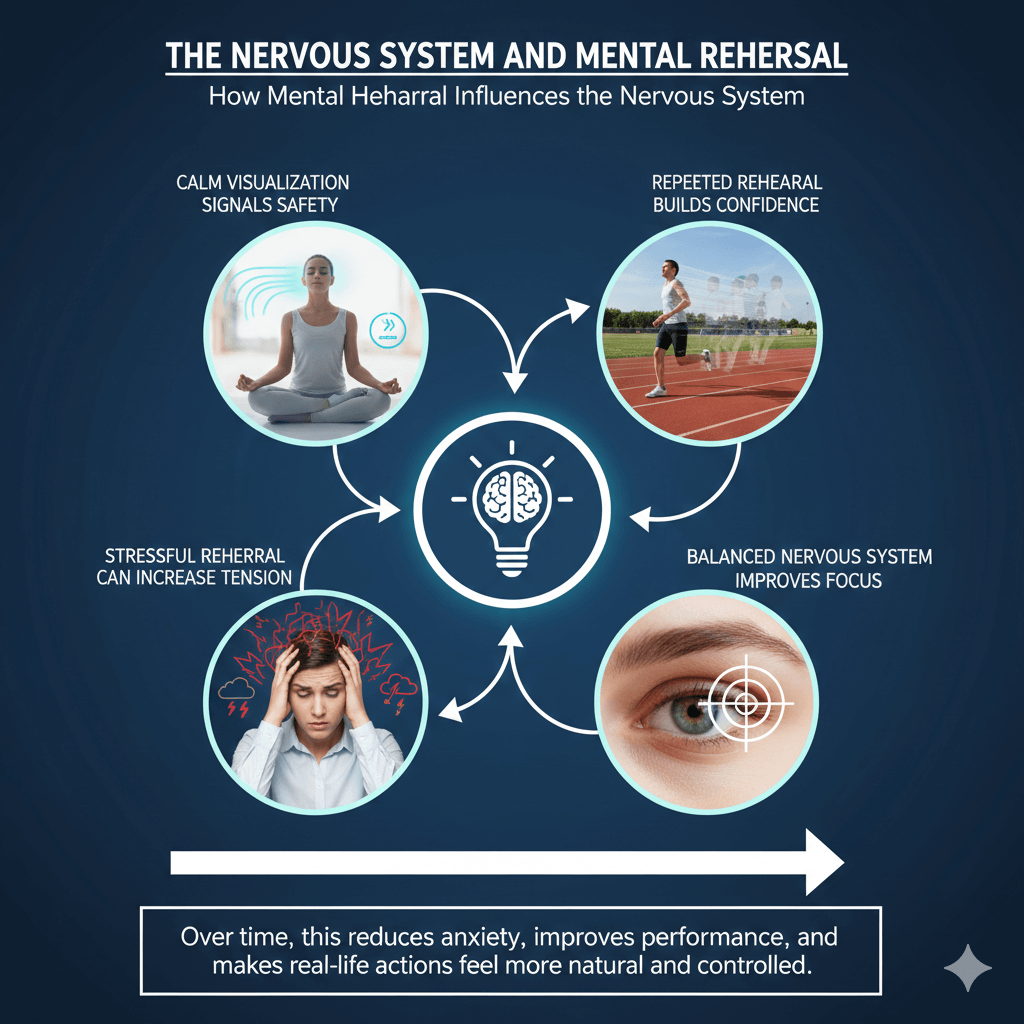
The nervous system plays an important role in how mental rehearsal works. When you imagine performing a task calmly and clearly, the brain sends signals similar to real action. This helps the body feel familiar with the experience before it actually happens. If the nervous system is relaxed, the mind can focus better and learn faster. If it is stressed, the body reacts with tension and hesitation. Mental rehearsal in a calm state trains the brain to respond with confidence instead of fear. Over time, this reduces anxiety, improves performance, and makes real-life actions feel more natural and controlled.
How Mental Rehearsal Influences the Nervous System
- Calm visualization signals safety to the body
When you mentally rehearse while breathing slowly, the nervous system shifts into a relaxed mode. This reduces muscle tension and prepares the body to respond smoothly instead of reacting with stress. - Repeated rehearsal builds familiarity and confidence
Imagining the same action multiple times makes the brain treat it as a known experience. Familiarity lowers nervousness during the real situation, improving performance. - Stressful rehearsal can increase tension
If visualization is done with worry or pressure, the nervous system stays in alert mode. Practicing calm emotion is essential so the body learns confidence instead of fear. - Balanced nervous system improves coordination and focus
When the body feels safe, attention becomes steady and movements become more controlled. This helps you act clearly and effectively when the moment arrives.
Why Athletes and Successful People Use Visualization
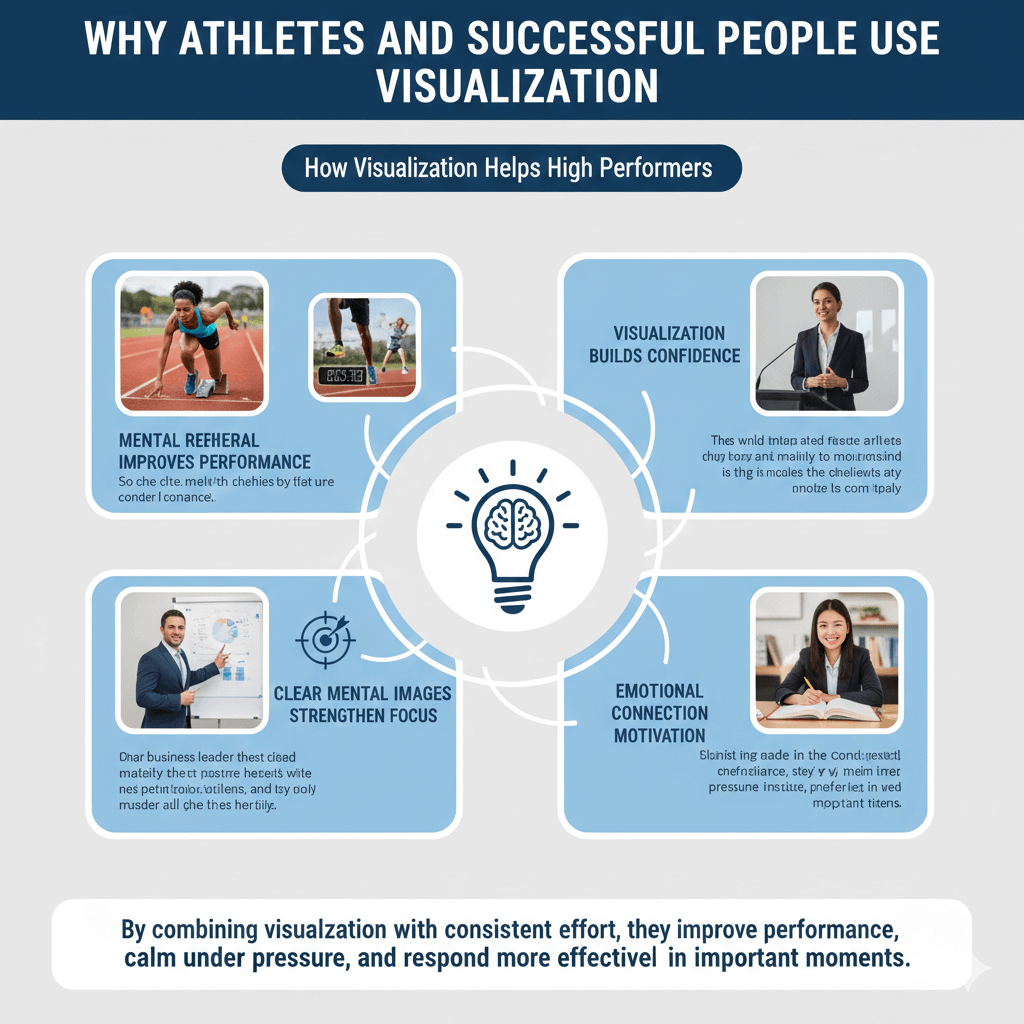
Athletes and successful people use visualization because it prepares the mind before real performance. When they mentally rehearse winning, presenting, or completing a task, the brain becomes familiar with the experience. This reduces fear, improves focus, and builds confidence. Visualization helps them see the goal clearly, which guides their actions during practice and execution. It also strengthens motivation because the result feels real and achievable. Instead of waiting for confidence to appear, they create it through repeated mental rehearsal. By combining visualization with consistent effort, they improve performance, stay calm under pressure, and respond more effectively in important moments.
How Visualization Helps High Performers
- Mental rehearsal improves performance before the real event
Athletes imagine their movements, timing, and success repeatedly. This trains the brain to execute actions smoothly. Example: A runner visualizes the race start and finish, which helps reduce nervousness and improves coordination during the actual competition. - Visualization builds confidence in high-pressure situations
Seeing success in the mind makes the situation feel familiar instead of threatening. Example: A public speaker imagines delivering a clear presentation, which reduces stage fear and improves body language. - Clear mental images strengthen focus and decision-making
When the goal is visualized clearly, attention stays on what matters. Example: A business leader visualizes a successful meeting outcome, helping them communicate with clarity and purpose. - Emotional connection increases motivation and consistency
Feeling the success in advance encourages regular practice. Example: Priya imagined receiving her award, which motivated her to continue disciplined preparation every day.
Daily Visualization Practices That Actually Work
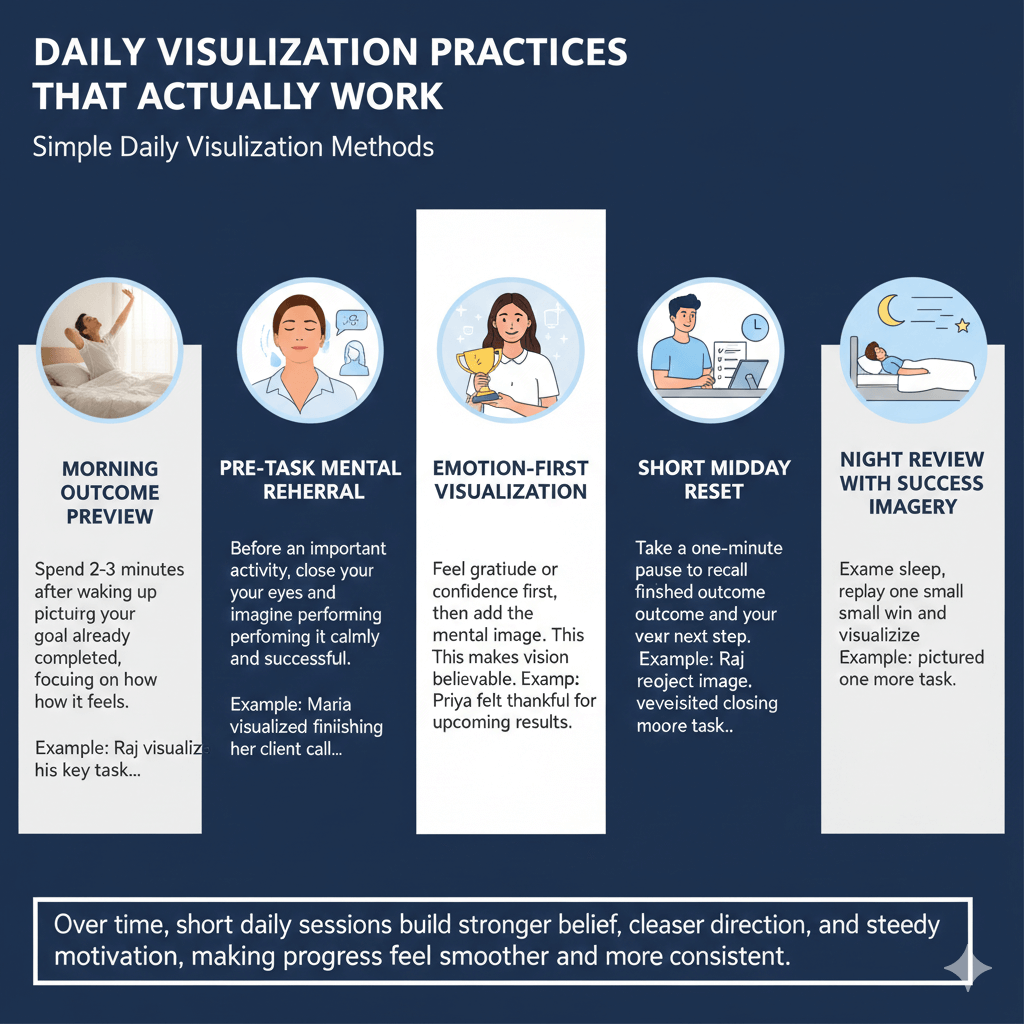
Effective visualization is simple, consistent, and calm. It works best when practiced for a few minutes every day rather than forcing long or intense sessions. The goal is to create a clear mental picture of the desired result while feeling relaxed and confident. When the body is calm, the mind becomes more receptive and the image feels natural instead of forced. Daily visualization helps the brain become familiar with the goal, which reduces doubt and improves focus during real actions. It is important to include emotion—such as gratitude or quiet confidence—so the experience feels meaningful. These practices do not replace effort; they prepare your mindset so that decisions and behaviors align with your intention. Over time, short daily sessions build stronger belief, clearer direction, and steady motivation, making progress feel smoother and more consistent.
Simple Daily Visualization Methods
- Morning outcome preview
Spend 2–3 minutes after waking up picturing your goal already completed, focusing on how it feels. Example: Raj visualized finishing his key task before checking messages, which helped him start work with clarity instead of reacting to distractions. - Pre-task mental rehearsal
Before an important activity, close your eyes and imagine performing it calmly and successfully. Example: Maria visualized her client call going smoothly, which reduced anxiety and improved her communication. - Emotion-first visualization
Feel gratitude or confidence first, then add the mental image. This makes the vision believable. Example: Priya felt thankful for her upcoming results, then pictured seeing her score, which increased her motivation to study. - Short midday reset
Take a one-minute pause to recall the finished outcome and your next step. Example: Raj revisited his completed project image during lunch, helping him return to work with focus instead of fatigue. - Night review with success imagery
Before sleep, replay one small win and visualize tomorrow’s progress. Example: Maria pictured closing one more task the next day, which reduced overthinking and improved consistency.
Turning Vision Into Real-World Action

Vision becomes meaningful only when it turns into real action. Seeing the result in your mind gives direction, but daily steps create progress. When you hold a clear vision, decisions become easier because you know what supports the outcome. This reduces hesitation and wasted effort. Action does not need to be big or perfect—small, consistent steps are enough to build momentum. Vision helps you stay focused during challenges because you remember the purpose behind your work. By combining clear mental images with practical effort, you move from intention to results. Over time, steady action guided by vision turns ideas into real achievements.
How to Convert Vision Into Consistent Action
- Break the vision into simple daily tasks
Divide the big goal into small, manageable steps so the mind does not feel overwhelmed. Example: Raj wanted a promotion, so he practiced one skill each day instead of worrying about the entire career path. - Choose one priority that supports the end result
Focus on the task that moves you closest to the outcome. Example: Maria selected one revenue-generating activity daily, which kept her efforts aligned with business growth. - Take action even when motivation is low
Small progress maintains momentum and reduces procrastination. Example: Priya studied for 20 minutes on busy days, keeping her preparation consistent instead of stopping completely. - Review progress to strengthen confidence and clarity
Regularly check what is working and adjust your approach. Example: Raj reviewed weekly wins, which helped him stay focused and improve his strategy. - Keep actions calm, steady, and sustainable
Avoid extreme effort that leads to burnout; aim for consistent routines. Example: Maria followed short focused work sessions, maintaining energy and long-term productivity.
Signs Your Visualization Is Working
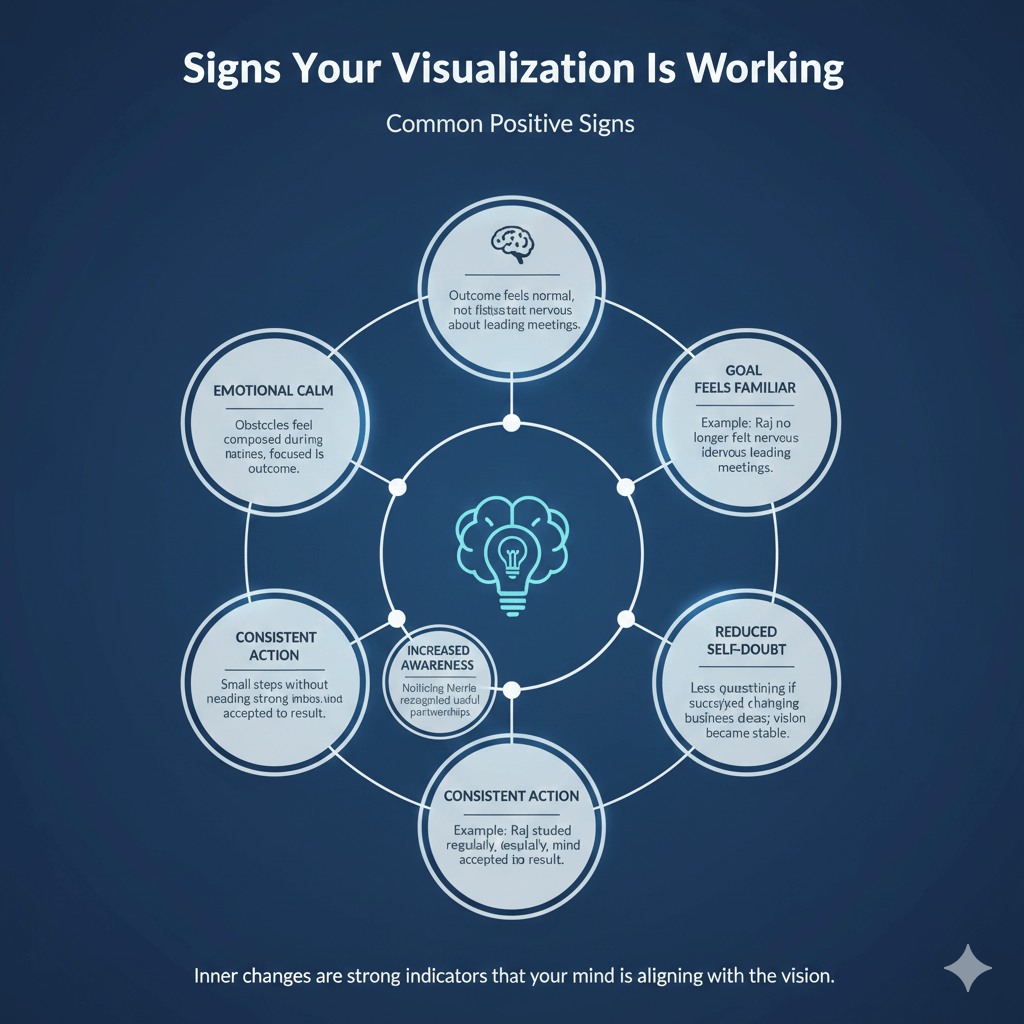
When visualization starts working, the changes usually appear inside before they appear outside. You may notice clearer focus, reduced doubt, and a calmer emotional state around your goal. The result begins to feel familiar instead of distant. Decisions become easier because your mind already accepts the direction. You may also find yourself taking action more naturally without forcing motivation. Visualization does not always create instant external results, but it gradually shifts your thoughts, emotions, and behavior. These inner changes are strong indicators that your mind is aligning with the vision, which eventually supports visible progress in real life.
Common Positive Signs
- The goal starts to feel familiar and achievable
Instead of feeling distant or unrealistic, the outcome feels normal in your mind. Example: Raj no longer felt nervous about leading meetings because he had visualized it often, making the situation feel known rather than intimidating. - Reduced overthinking and self-doubt
You spend less time questioning whether success is possible. Example: Maria stopped repeatedly changing her business ideas because her vision became clear and stable through daily visualization. - More natural and consistent action
You begin taking small steps without needing strong motivation. Example: Priya studied regularly because her mind already accepted the result she was working toward. - Improved emotional calm around challenges
Obstacles feel manageable instead of overwhelming. Example: Raj stayed composed during deadlines because he focused on the completed outcome instead of pressure. - Increased awareness of helpful opportunities
You start noticing people, resources, or ideas that support your goal. Example: Maria recognized useful partnerships because her mind was tuned to her desired direction.
Conclusion:
Every result begins as a clear picture in the mind before it appears in real life. When you repeatedly visualize your goal with calm confidence, the brain starts treating it as familiar and possible. This reduces doubt and guides your actions in the right direction. Visualization is not about escaping reality; it is about preparing for it. When your thoughts, emotions, and actions align with what you see internally, progress becomes natural. By first seeing success in your mind, you create the clarity and belief needed to experience it in life.
Support This Work 🤍

If this article brought you hope, clarity, or a little peace, and you feel guided to support this work, you’re welcome to do so.
This platform, affirmwithsoul, is created with the intention of spreading belief, positivity, and inner healing.
If you’d like to support me with a small contribution (anywhere between $1–$10, or any amount you feel called to give), it would truly be a blessing and help me continue creating and sharing this work.
Support is always optional—your presence here already means a lot.
Thank you for being part of this journey
The Real Law Of Attraction Code

Unlock your true potential with this powerful Law of Attraction program designed to manifest your dreams through practical, proven techniques. This program offers step-by-step guidance for cultivating a positive mindset, visualizing your goals, and taking inspired action that leads to real results. Plus, it comes with a risk-free guarantee so you can start transforming your life confidently.
Key benefits and unique features include:
Guided exercises to reframe negative thoughts and boost optimism
Techniques for daily gratitude practice and emotional visualization to attract positive energy
Practical steps to align your mindset with your goals, promoting mental well-being and increased confidence
Tools to create a clear vision and break your dreams into achievable actions
Risk-free trial or money-back guarantee to ensure satisfaction and trust
Start your journey toward success and abundance today with this transformative program. Get instant access here: